
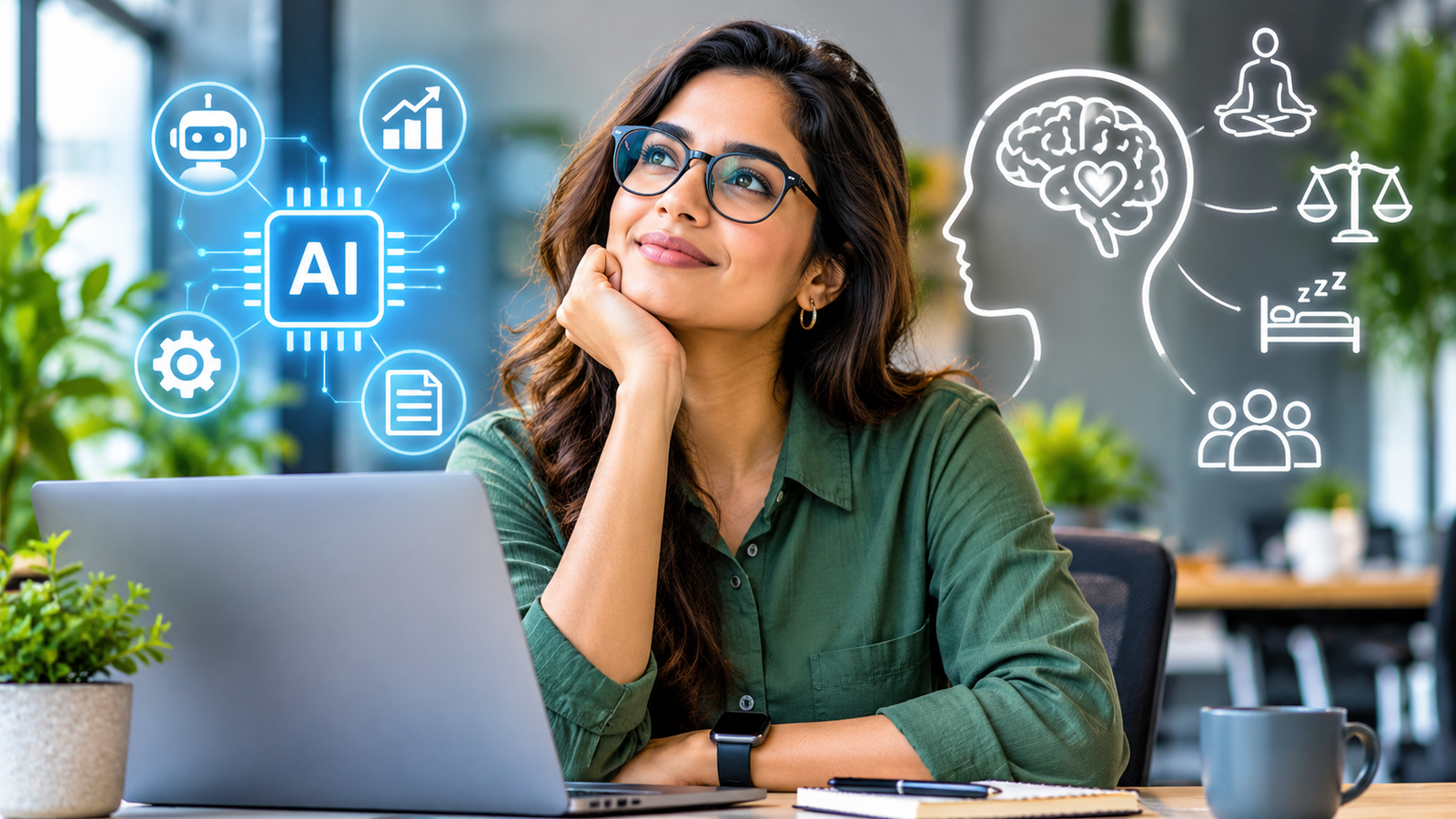
Artificial intelligence is changing how people work, communicate, solve problems, and manage everyday responsibilities. Tasks that once required hours of research or writing can now be completed much faster. However, as AI becomes part of daily working life, an important question deserves attention: Are we improving productivity while overlooking our mental well-being?
AI can reduce repetitive work and make information easier to access. At the same time, changing expectations, uncertainty about job roles, constant digital interaction, and pressure to keep learning can create new challenges.
The American Psychological Association (APA) recently released workplace guidance highlighting the importance of human oversight, trust, thoughtful job design, and employee well-being when organisations introduce AI. Its recommendations suggest that successful AI adoption should consider people, not just technology. You can explore the APA’s latest guidance on introducing AI into workplaces for more information.
The goal should not be to avoid AI or use it for everything. Instead, we need to develop a healthier relationship with technology while protecting our attention, confidence, creativity, and emotional balance.
Here are eight practical ways to maintain mental well-being in an increasingly AI-driven workplace.
1. Use AI as an Assistant, Not a Replacement for Your Thinking
AI can generate ideas, organise information, and suggest solutions. However, relying on it for every decision may reduce opportunities to practise independent thinking.
Your ability to question information, recognise mistakes, and make thoughtful decisions remains important. AI-generated responses can also contain inaccurate or incomplete information.
Before accepting an answer, take a moment to evaluate it. Consider whether the information makes sense, whether the source is reliable, and whether the recommendation suits your situation.
Try this: Use AI to explore possibilities, but make your final decisions after considering the facts and your own judgement.
2. Set Clear Boundaries Around Technology
When digital tools are always available, work can gradually extend into personal time. Notifications, messages, automated reminders, and AI-generated tasks may make it difficult to disconnect.
Constant availability can also create the feeling that something always needs your attention.
Establishing boundaries helps protect your personal time. Decide when you will check work messages and when you will stop using professional tools for the day.
For example, avoid checking work notifications during meals or immediately before sleeping. A short break from screens can give your mind an opportunity to recover.
Try this: Set a clear finishing time for work-related technology and avoid unnecessary notifications outside working hours.
3. Learn New Skills Without Comparing Yourself to Technology
AI can complete certain tasks quickly, which may lead people to question their own abilities. Some employees might feel pressured to work faster or learn every new tool immediately.
However, human skills remain valuable. Creativity, empathy, communication, leadership, ethical judgement, and understanding people’s needs cannot be reduced to typing speed or task completion.
Learning is important, but constant comparison creates unnecessary pressure.
Focus on developing skills that complement technology rather than competing with it.
Try this: Choose one useful skill to improve each month. Give yourself enough time to practise instead of trying to master every new tool.
4. Protect Your Attention From Digital Overload
Working with several applications, conversations, notifications, and AI tools can fragment your attention.
Switching between tasks repeatedly may make it harder to concentrate. Even when technology saves time, managing multiple streams of information can feel mentally exhausting.
A more focused approach can make daily work manageable.
Choose your most important task and give it a dedicated period of attention. Close unnecessary tabs, silence non-essential notifications, and take short breaks between demanding activities.
Try this: Work on one meaningful task for 25–40 minutes before checking messages or moving to another activity.
5. Keep Human Communication at the Centre of Work
Digital tools make communication faster, but speed does not always create understanding.
A message generated by AI may sound professional while missing the emotional context of a conversation. Difficult discussions, feedback, collaboration, and relationship-building often require human judgement.
Talking directly with colleagues can help prevent misunderstandings and strengthen trust.
Make space for conversations that go beyond task updates. Ask questions, listen carefully, and acknowledge other people’s perspectives.
Try this: Replace one unnecessary message exchange with a direct conversation. A few minutes of genuine communication can sometimes resolve confusion more effectively.
6. Make Room for Creativity and Independent Problem-Solving
AI can provide suggestions, but original thinking often develops through experimentation, curiosity, and personal experience.
If every challenge begins with asking an AI tool for an answer, you may miss opportunities to explore your own ideas.
Try approaching a problem independently before using technology. Write down possible solutions, consider different perspectives, and identify what you already know.
After that, use AI to compare ideas or discover alternatives.
Try this: Spend five minutes brainstorming your own solution before asking an AI tool for suggestions.
7. Recognise When Productivity Pressure Becomes Stress
Technology can make work more efficient, but efficiency does not automatically mean a healthier working environment.
When tasks become faster, expectations may also change. Employees might feel that they should complete more work simply because certain activities now take less time.
This can create pressure to remain constantly productive.
Notice signs such as irritability, difficulty concentrating, poor sleep, or feeling unable to switch off after work. These experiences do not automatically indicate a mental health condition, but they can signal that your routine needs attention.
Build realistic expectations around your workload. Discuss unclear responsibilities with your manager and take proper breaks.
Developing healthy coping habits also matters. Our guide on building emotional resilience through daily habits offers additional ideas for managing everyday challenges.
Try this: At the end of each workday, identify what you completed instead of focusing only on unfinished tasks.
8. Create a Healthier Relationship With AI
The most sustainable approach is to use technology intentionally.
AI should support your goals rather than control your routine. Decide which tasks genuinely benefit from automation and which require personal attention.
For example, AI may help organise a schedule or summarise a lengthy document. However, personal conversations, important decisions, and sensitive situations often require careful human involvement.
Review your technology habits regularly. Notice whether a tool is saving time, reducing unnecessary effort, or simply adding another source of distraction.
Try this: Once a week, review the digital tools you use. Keep the ones that provide genuine value and reduce your dependence on those that create unnecessary complexity.
Why Human Skills Matter in an AI-Driven Workplace
The future of work will involve more interaction between people and intelligent systems. Technical knowledge will remain useful, but emotional awareness and human judgement will also play an important role.
Several abilities deserve continued attention:
- Critical thinking: Evaluating information instead of accepting every response.
- Emotional intelligence: Understanding emotions and responding thoughtfully.
- Adaptability: Adjusting to changes without losing confidence.
- Communication: Expressing ideas clearly and listening to others.
- Creativity: Exploring original approaches to unfamiliar problems.
- Self-awareness: Recognising personal limits and identifying when a break is necessary.
These skills help people use technology responsibly while maintaining meaningful relationships and personal confidence.
Frequently Asked Questions
1. Can AI affect mental well-being?
AI itself does not affect everyone in the same way. However, the way people use it can influence their working habits, stress levels, attention, and sense of control. Unclear expectations and excessive digital demands may create additional pressure.
2. Should employees use AI for every task?
No. AI is useful for many repetitive and information-based activities, but not every task benefits from automation. Human judgement remains essential for sensitive decisions, relationship-building, ethical questions, and complex situations.
3. How can I avoid feeling overwhelmed by AI developments?
Focus on learning tools that are relevant to your work. Avoid comparing your progress with others, take regular breaks, and allow yourself time to understand new technology.
4. Will human skills still matter in the future?
Yes. Critical thinking, empathy, creativity, communication, and ethical judgement are important abilities when working with AI. Technology can support many activities, but people remain responsible for how it is used.
5. How can organisations support employee well-being during AI adoption?
Organisations can provide clear policies, appropriate training, meaningful human oversight, employee involvement, and realistic performance expectations. They should also consider how technology changes workloads and workplace relationships.
Final Thoughts
AI is changing the workplace, but productivity should not be the only measure of progress.
A healthier working environment allows people to benefit from technology without sacrificing concentration, creativity, personal time, or emotional balance. That requires thoughtful decisions from both employees and organisations.
Use AI where it genuinely helps. Continue developing your own abilities, protect time away from screens, and maintain meaningful human connections.
Technology should make work more manageable, not make people feel that they must be available and productive every moment.
At Rational Works, we believe that lasting well-being comes from building practical habits that support both the mind and body. As technology continues to evolve, protecting our human strengths will matter just as much as learning to use new tools.