
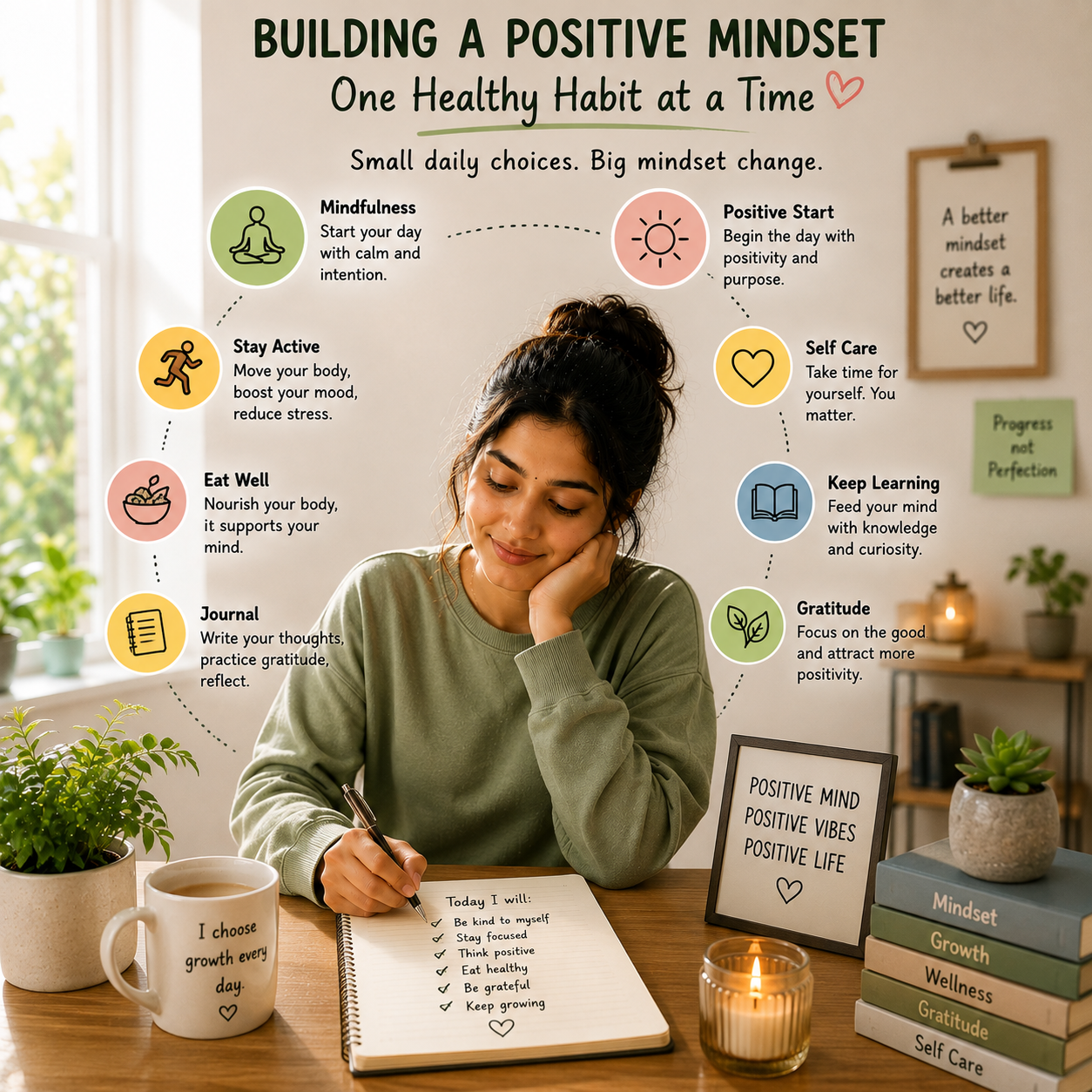
Some days feel easy, while others bring pressure, disappointment, uncertainty, or frustration. Although you cannot control everything that happens, you can influence how you respond to those experiences. Developing a positive mindset doesn’t mean pretending that problems don’t exist. Instead, it means learning to approach difficult situations with greater balance, patience, and hope.
A healthier outlook can help you notice opportunities, learn from setbacks, and focus on practical actions instead of getting trapped in negative thinking. Fortunately, you don’t need to completely change your personality to develop this habit. Small adjustments to the way you think and respond can gradually make a meaningful difference.
What Does a Positive Mindset Really Mean?
A positive mindset isn’t about feeling happy all the time. Everyone experiences sadness, frustration, worry, and self-doubt. Trying to ignore those emotions can make difficult situations harder to handle.
Instead, healthy positivity means acknowledging what you’re experiencing while looking for a constructive way forward. For example, receiving a disappointing result may feel discouraging. Rather than deciding that you’re incapable, you can examine what went wrong and consider what could be improved next time.
This approach doesn’t remove the problem. It simply changes your response to it.
8 Ways to Build a Positive Mindset
1. Begin the Day With Intention
The first part of your morning can influence how you approach the rest of the day. Rather than immediately checking notifications or social media, spend a few moments deciding what deserves your attention.
Perhaps you want to remain patient during a busy day. Maybe completing an important task is your priority. Another possibility is simply reminding yourself to take things one step at a time.
A clear intention gives your day direction. Even when unexpected situations appear, that reminder can help you return to the attitude you want to maintain.
2. Change the Way You Speak to Yourself
The words you repeatedly use with yourself can influence your confidence.
Consider the difference between saying, “I always get things wrong,” and saying, “I made a mistake, but I can learn from it.” The second response doesn’t deny the mistake. Instead, it leaves room for improvement.
Whenever harsh self-talk appears, pause before accepting it as fact. Ask yourself whether you would speak to a friend in exactly the same way. If you wouldn’t, try replacing the thought with something more realistic and supportive.
Over time, kinder self-talk can become a healthier mental habit.
3. Focus on What You Can Control
Worry often increases when your attention remains fixed on circumstances that cannot be changed. Another person’s behavior, yesterday’s mistake, or an unexpected delay may be outside your control.
Your response, however, may still be within your influence.
Ask yourself, “What can I do right now?” This simple question shifts attention from endless worrying toward practical action. Perhaps you can complete one task, ask for help, make a decision, or give yourself time to process what happened.
Focusing on controllable actions can make challenging situations feel more manageable.
4. Notice the Good Things Around You
Gratitude can help you recognize positive experiences that are easily overlooked during a busy day. This doesn’t mean convincing yourself that everything is perfect.
Instead, notice something that genuinely matters to you. It could be a supportive friend, progress toward a goal, a peaceful walk, an enjoyable meal, or a productive morning.
Writing down a few things you appreciate can gradually train your attention to notice positive experiences alongside difficulties. As a result, your overall perspective may become more balanced.
5. Don’t Feed Negative Thinking
Negative thoughts can become stronger when you repeatedly revisit them. Replaying an embarrassing conversation or worrying about the same problem for hours rarely changes what happened.
When you notice yourself going around the same thought repeatedly, ask whether there’s a useful action you can take.
If there is, identify the next step. If there isn’t, give yourself permission to redirect your attention.
This doesn’t mean forcing negative thoughts away. Instead, you’re choosing not to give them more attention than they deserve.
6. Choose Your Influences Carefully
The people around you and the content you consume can affect your outlook.
Supportive conversations can provide encouragement during difficult periods. On the other hand, constant exposure to negativity, criticism, or unhealthy comparison may leave you feeling mentally drained.
Pay attention to how different environments affect you. Spend more time with people who encourage respect, growth, and honest communication. At the same time, consider reducing unnecessary exposure to content that repeatedly makes you feel inadequate.
A healthier environment can make positive thinking easier to practise.
7. Learn From Setbacks
Setbacks are a normal part of life. An interview may not go well, an assignment may receive a disappointing grade, or an important plan may fail.
Instead of treating every setback as proof that you aren’t capable, look for information within the experience.
Ask yourself what worked, what didn’t, and what you could change next time. This turns disappointment into useful feedback.
With practice, setbacks can become opportunities to develop patience, adaptability, and resilience.
8. Recognize Your Daily Progress
Many people finish their day thinking about everything they didn’t accomplish. Consequently, even a productive day can feel unsuccessful.
Before going to bed, take a moment to recognize something you handled well. Perhaps you completed an important task, stayed calm during a difficult conversation, helped someone, or simply continued despite feeling tired.
Progress doesn’t always look dramatic.
Sometimes, showing up, trying again, or making one better decision is enough. Recognizing those moments can strengthen confidence and encourage continued effort.
A Positive Mindset Doesn’t Mean Being Positive All the Time
It’s important to keep expectations realistic. Nobody feels optimistic every day, and difficult emotions are a normal part of life.
Someone with a positive mindset can still feel nervous before an important event or disappointed after failure. The difference lies in how they respond afterward.
Rather than allowing one difficult experience to define the entire day, they can acknowledge the emotion and gradually look for a constructive next step.
That balance makes positive thinking more realistic and sustainable.
Building a Positive Mindset as a Student
Students often experience pressure from examinations, assignments, deadlines, competition, and expectations. A disappointing grade can sometimes lead to the belief that one result defines their ability.
However, one result doesn’t tell the complete story.
Reviewing mistakes, changing study methods, asking questions, and trying again can create a more productive response. Similarly, constantly comparing yourself with classmates can reduce confidence, while focusing on personal improvement can provide a clearer measure of progress.
Small changes in self-talk can therefore make academic challenges easier to approach.
What to Do on Difficult Days
Some days will challenge even your best habits. You may feel tired, receive disappointing news, miss an important deadline, or simply have a difficult day.
During those moments, don’t expect yourself to maintain an unrealistic level of optimism. Instead, reduce the pressure and focus on something manageable.
Take a short break, talk to someone you trust, get some fresh air, or complete one small task. Sometimes, a positive mindset simply means believing that a difficult moment will pass and that another step is possible.
You don’t have to feel great to keep moving forward.
Final Thoughts
Creating a positive mindset isn’t about ignoring problems or pretending that everything is fine. Instead, it involves developing a healthier way to respond when life becomes challenging.
Start your day with intention, improve your self-talk, focus on what you can control, notice the good things around you, and learn from setbacks. Most importantly, recognize your progress instead of judging yourself only by what remains unfinished.
Some days will still be difficult, and that’s completely normal.
The goal isn’t to think positively every second. It’s to develop the ability to find a constructive next step, even when circumstances aren’t ideal.
Small changes repeated consistently can gradually influence the way you approach everyday life.
For more practical ideas about developing healthier thinking patterns, explore Positive Self-Talk: How to Change the Way You Speak to Yourself.
For additional information about mental well-being, explore resources from the American Psychological Association.
Frequently Asked Questions
1. What is a positive mindset?
A positive mindset is a balanced way of approaching life that allows you to recognize difficulties while focusing on constructive responses, learning opportunities, and realistic possibilities.
2. How can I develop a positive mindset?
Start with small habits such as improving self-talk, focusing on controllable actions, practising gratitude, learning from mistakes, and recognizing daily progress.
3. Can a positive mindset improve confidence?
It can support confidence by helping you recognize personal progress, learn from setbacks, and replace overly harsh self-judgment with more realistic thinking.
4. How long does it take to develop a positive mindset?
There is no fixed timeframe. Thinking patterns develop through repeated practice, so focus on gradual improvement rather than expecting an immediate transformation.