
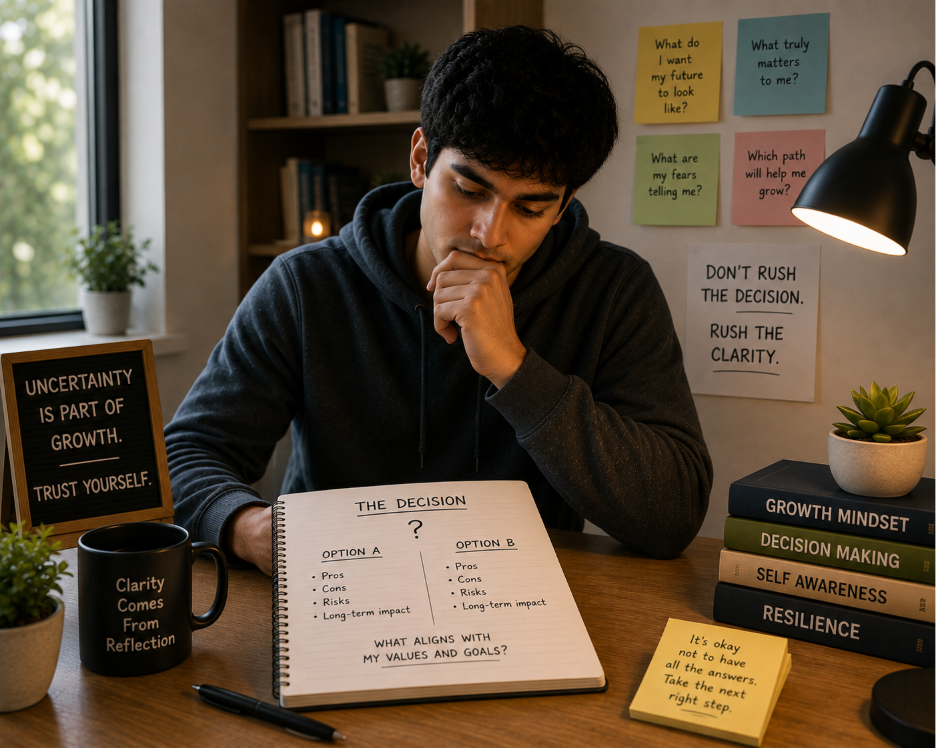
Life does not always provide clear answers. You may be waiting for an important decision, starting a new job, considering a career change, or dealing with an unexpected situation. During these moments, learning how to handle uncertainty can help you stay steady when the future feels unclear.
You do not need to know exactly what will happen next. Instead, focus on what you know, what you can control, and what you can do today. These simple steps can make uncertain situations feel more manageable.
Uncertainty is a normal part of life. Although it can feel uncomfortable, you can develop better ways to respond to it.
Why Learning How to Handle Uncertainty Matters
People naturally prefer situations where the outcome is predictable. Knowing what will happen can create a sense of safety and control.
When the future is unclear, however, your mind may start imagining different possibilities. You might think about what could go wrong, replay previous decisions, or search for answers that cannot be known yet.
Some planning is helpful. Constantly trying to predict every possible outcome is different. It can increase stress without giving you any more control.
A healthier approach is to separate what you know from what you do not know. Then, direct your attention toward the things you can influence.
8 Practical Ways to Handle Uncertainty
1. Separate Facts From Assumptions
Uncertainty becomes harder when assumptions start to feel like facts.
For example, waiting for an interview result does not automatically mean you were rejected. A delayed message does not necessarily mean something went wrong.
When negative thoughts appear, ask yourself:
- What do I actually know?
- What am I assuming?
- What information is still missing?
This simple check can help you avoid treating possibilities as guaranteed outcomes.
2. Focus on What You Can Influence
Not everything in life is within your control.
You cannot decide how another person will respond. Likewise, you cannot control when an organization will make a decision or exactly what will happen months from now.
However, you can control how you prepare, communicate, respond, and use your time.
Therefore, instead of repeatedly asking, “What will happen?” ask, “What can I reasonably do today?”
That change in focus can create a healthier sense of control.
3. Avoid Constantly Seeking Reassurance
When something feels uncertain, checking for answers can provide temporary comfort.
You might refresh your email, search online, ask several people for opinions, or revisit the same decision again and again.
Unfortunately, repeated checking does not always reduce uncertainty. In some cases, it can keep your attention focused on the problem.
Set reasonable limits around checking and researching. Once you have enough useful information, give yourself permission to pause.
Not every unanswered question needs an immediate answer.
4. Create a Simple Plan for Different Outcomes
A basic plan can make an uncertain situation feel easier to manage.
Think about the most realistic outcomes rather than every possible scenario.
For example, if you are waiting for an opportunity, consider what you will do if the answer is positive. Then think about what you could do if the answer is negative.
You do not need a detailed plan for every possibility.
Instead, create a flexible direction that allows you to respond when new information becomes available.
How to Handle Uncertainty With a Stable Routine
5. Keep Your Daily Routine Steady
Uncertainty can affect ordinary habits. Sleep may become irregular, meals may be skipped, and normal activities can be replaced by hours of worrying.
A simple routine can provide stability when other areas of life feel unpredictable.
Try to maintain regular meals, enough rest, movement, work or study time, and activities you enjoy.
A routine cannot remove uncertainty. Still, it gives you something dependable while you wait for greater clarity.
6. Make Decisions With the Information You Have
Waiting for complete certainty can prevent you from making reasonable decisions.
Most real-life choices involve some level of unknown information. You may not know exactly how a new opportunity will develop or whether a particular choice will produce the result you want.
Gather the important information that is available. Consider the possible effects and make the best decision you can at that moment.
Later, you can reassess when new information appears.
A thoughtful decision made with limited information can be more useful than endless waiting for perfect certainty.
7. Stay Present Instead of Living in Future Scenarios
Uncertainty often pulls your attention toward an imagined future.
You may spend hours thinking about conversations that have not happened, problems that may never occur, or outcomes that cannot yet be known.
When you notice this pattern, bring your attention back to the present.
Ask yourself what you are doing right now. Then decide whether that activity deserves your attention.
Being present does not mean ignoring the future. Rather, it means refusing to let imagined possibilities take over your entire day.
How to Handle Uncertainty When Answers Take Time
8. Accept That Some Questions Need Time
Not every situation can be resolved immediately.
Some answers depend on another person’s decision. Others depend on changing circumstances or information that has not become available yet.
Trying to force an answer before you have enough information can create more frustration.
Sometimes the most honest response is simply:
“I don’t know yet.”
That does not mean you are weak or unprepared. It means you recognize what is currently unknown.
You can continue making sensible choices while allowing some answers to arrive later.
How to Handle Uncertainty at Work
Professional life can involve many unknowns.
You might be waiting for a promotion decision, starting a new responsibility, considering a career opportunity, or working on a project with an unclear outcome.
It can be tempting to spend too much time guessing what other people are thinking.
Instead, focus on your responsibilities. Prepare carefully, communicate when clarification is needed, and complete the work within your control.
If circumstances change, adjust your approach.
Adaptability can be more useful than trying to predict every possible development.
How to Handle Uncertainty as a Student
Students also face many situations where the future is unclear.
Choosing a career path, waiting for examination results, applying for internships, or deciding what to study next can create doubt.
You do not need to have your entire future planned today.
Start by researching your options. Speak with people who have relevant experience and learn about the paths available to you.
Then make the best decision you can with the information you have.
As you gain experience, you can change your direction. One decision does not always determine your entire future.
When Your Mind Keeps Asking “What If?”
“What if?” questions can sometimes help you prepare.
However, repeated hypothetical thinking can become exhausting. If you notice yourself imagining negative possibilities again and again, pause for a moment.
Ask yourself whether the thought requires action.
If there is something useful you can do, identify that action and take it. If there is nothing you can do right now, acknowledge the thought and return to your current activity.
You do not need to eliminate every uncertain thought.
The goal is to stop those thoughts from taking over your attention.
Uncertainty Can Create Opportunities
Not knowing what will happen can feel uncomfortable. At the same time, uncertainty can leave room for unexpected possibilities.
A career change may introduce you to a new opportunity. A new environment might help you discover an interest you had never considered. A difficult transition could also help you develop useful skills.
This does not mean every uncertain situation is positive.
Some experiences are genuinely difficult. Still, keeping an open mind can prevent your thinking from focusing only on negative outcomes.
The future contains risks, but it also contains possibilities.
Do Not Demand Immediate Clarity
Clarity often develops through experience.
You may understand a decision better after trying something, gathering more information, or seeing how circumstances develop.
Instead of demanding a complete answer immediately, allow yourself to learn as you go.
Take the next reasonable step. Then reassess.
This approach gives you room to change your plans when new information appears.
Simple Daily Practices for Handling Uncertainty
If uncertainty is taking up too much of your attention, try these simple practices:
- Write down what you know and what you do not know.
- Focus on actions that are within your control.
- Limit unnecessary checking and searching.
- Keep your normal daily routine.
- Make decisions using the information available.
- Take one step instead of solving everything at once.
- Spend some time away from screens and constant updates.
- Return your attention to the present moment.
- Accept that some answers may take time.
Small actions can create a stronger sense of stability during uncertain periods.
Final Thoughts
Learning how to handle uncertainty does not mean becoming comfortable with every unknown situation.
Instead, it means developing the ability to remain steady when clear answers are not available.
Separate facts from assumptions. Focus your energy on what you can influence. Avoid constantly searching for reassurance, while still gathering information that genuinely helps you make decisions.
A simple plan can prepare you for different outcomes. Meanwhile, a stable daily routine can provide structure during unpredictable periods.
Most importantly, remember that you do not need to know everything today.
Some answers require time. Some decisions may change as new information appears. Other paths may become clearer only after you begin moving forward.
When the future feels unclear, focus on the next useful decision rather than trying to predict the entire journey.
You may not control what comes next. You can still choose how you respond to it.
For another practical guide to personal growth, explore Building Self-Awareness.
For additional information about managing stress and emotional well-being, visit the American Psychological Association.
Frequently Asked Questions On Handle Uncertainty
1. Why Is Uncertainty Difficult to Handle?
Uncertainty removes predictability, which can make you feel less in control. Your mind may respond by analysing possibilities or imagining negative outcomes.
2. How Can I Feel More Comfortable With Uncertainty?
Focus on facts, maintain your normal routine, make reasonable decisions with the information available, and accept that some answers will take time.
3. Should I Plan for Every Possible Outcome?
No. Consider realistic possibilities and prepare sensible responses. Trying to predict every scenario can create unnecessary stress.
4. How Can Students Handle an Uncertain Future?
Research your options, speak with people who have relevant experience, and make decisions based on the information currently available. Remember that your plans can change.
5. Is Uncertainty Always Negative?
No. Uncertainty can be uncomfortable, but it can also create opportunities for learning, change, and unexpected experiences.