
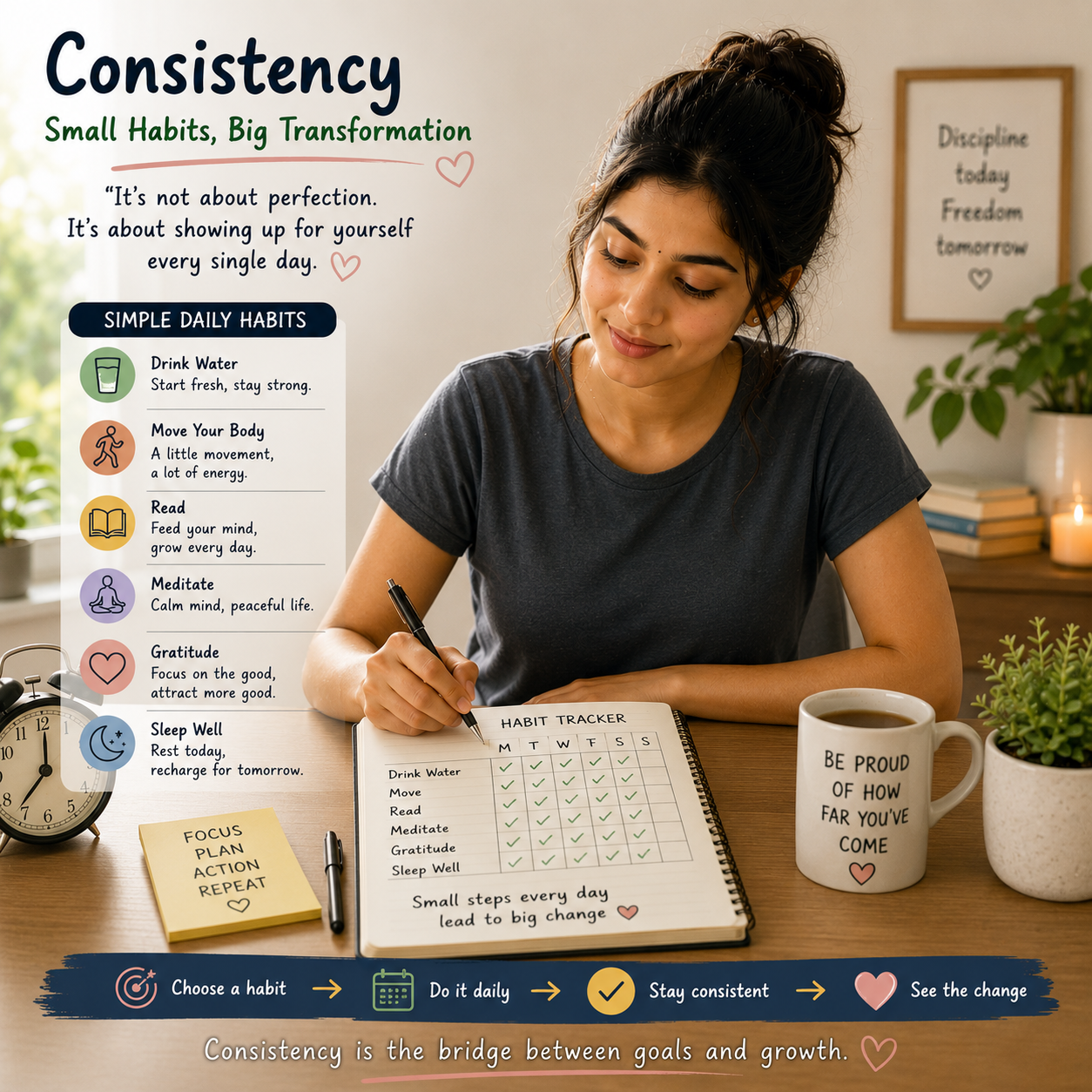
Building consistency is one of the best ways to create good habits and make steady progress toward your goals. Starting a new habit can feel exciting. You may want to exercise, study regularly, read more, or follow a healthier routine.
However, keeping a habit going can be harder than starting it. Motivation may drop after a few days. A busy schedule can also get in the way. Sometimes, missing one day can make you feel like you have failed.
That is why building consistency matters. Consistency does not mean doing everything perfectly. Instead, it means continuing to make progress even when motivation changes or life becomes unpredictable.
Fortunately, you do not need perfect discipline to become more consistent. Small changes to your routine, environment, and expectations can make good habits easier to follow.
In this article, you will learn eight practical ways to build consistency, maintain good habits, and make steady progress.
Why Building Consistency Matters
Motivation can help you begin a new habit. However, consistency helps you continue.
For example, one long study session may feel productive. Regular study sessions, on the other hand, can help you create a stronger routine over time.
The same idea applies to exercise, reading, work, and personal goals. One good day can be useful, but repeated effort creates lasting change.
Building consistency can help you:
- Create reliable routines
- Reduce procrastination
- Improve self-discipline
- Make progress toward long-term goals
- Build confidence
- Reduce daily decision-making
- Turn useful actions into habits
Most importantly, regular effort allows you to improve gradually instead of expecting immediate results.
8 Practical Ways to Build Consistency
1. Start With a Small Habit
Trying to change too much at once can make a new routine difficult to maintain.
For example, you might decide to exercise for an hour every morning, read thirty pages every night, meditate for twenty minutes, and change your diet at the same time.
Although this plan sounds impressive, it may become difficult after a few days.
A better approach is to start small.
You could:
- Read five pages
- Walk for ten minutes
- Study for twenty minutes
- Write one paragraph
- Stretch for five minutes
Once the habit feels comfortable, increase it slowly. As a result, the routine becomes easier to maintain.
2. Build Consistency by Connecting Habits to Existing Routines
New habits are easier to remember when they are connected to routines you already follow.
For example:
- After brushing your teeth → stretch for two minutes
- After breakfast → review your priorities
- After dinner → read for ten minutes
- After getting home → study for twenty minutes
An existing routine can act as a reminder for a new habit. Therefore, you do not have to depend only on memory or motivation.
Over time, the new action can become a natural part of your day.
3. Create a Realistic Schedule for Consistency
Your routine needs to fit your real life. A plan that works only on your best days will be difficult to maintain.
Instead of creating an ideal schedule, look at how your day actually works.
For instance, mornings may already be busy with work, school, or family responsibilities. In that case, adding a long morning routine may create extra pressure.
A student might find it easier to study for thirty minutes after returning home rather than planning a two-hour session that rarely happens.
Remember: a simple routine that you can follow is more useful than a perfect routine that you cannot maintain.
4. Make Consistent Habits Easier to Start
Sometimes, starting is the hardest part.
For this reason, remove as many small barriers as possible.
If you want to exercise in the morning, place your workout clothes nearby the night before. When reading is your goal, keep your book somewhere easy to see.
Likewise, students can prepare their study space before starting. Anyone trying to drink more water can keep a bottle within reach.
These small changes make the first step easier. Consequently, you spend less time trying to convince yourself to begin.
5. Track Your Progress and Build Consistency
Tracking your habits can help you see your progress clearly.
You could use:
- A calendar
- A notebook
- A habit-tracking app
- A simple checklist
- Notes on your phone
For example, someone learning a new skill could mark each day they practise.
Seeing completed days can provide encouragement. However, avoid becoming too focused on maintaining a perfect streak.
Missing one day does not erase the progress you have already made. Tracking should help you understand your habits and encourage regular action.
Building Consistency When Difficult Days Come
Even a good routine will sometimes be interrupted.
You might feel tired after a busy day. Travel could change your schedule. Unexpected responsibilities may also appear.
For this reason, do not build your routine around the idea that every day will be perfect.
Instead, prepare a smaller backup option.
For example, if you normally study for one hour but have a very busy day, study for fifteen minutes. Someone who usually exercises for thirty minutes could take a ten-minute walk instead.
The smaller action keeps the habit going.
Most importantly, remember that a difficult day does not mean you have to give up.
6. Do Not Let One Missed Day Become a Lost Week
Missing one day does not erase your progress.
Sometimes, people think, “I already missed today, so I will start again next week.” That thought can turn a small break into a long one.
Instead, return to the habit at the next realistic opportunity.
If you miss today’s workout, continue tomorrow. When you skip studying one evening, return to your study plan the next day.
A useful rule is:
Miss once. Return quickly.
This simple mindset can make long-term consistency easier.
7. Build Consistency by Focusing on Who You Want to Become
Goals are useful, but the way you see yourself can also affect your habits.
Rather than thinking:
“I need to read ten books this year.”
Try:
“I am becoming someone who reads regularly.”
Instead of:
“I need to exercise every day.”
Think:
“I am someone who takes care of my body.”
This change makes the habit part of your daily identity instead of making it feel like another task.
With regular practice, your actions can support the person you want to become.
8. Build Consistency by Focusing on Progress
Consistency becomes easier when you pay attention to progress instead of perfection.
Maybe you planned to study for one hour but only managed twenty minutes. That effort still counts.
Perhaps you wanted to exercise five days this week but completed three sessions. Those three sessions are still progress.
Rather than asking, “Did I do everything perfectly?” ask:
“Did I move forward?”
This question encourages a healthier approach to habits.
Building Consistency Is Different From Perfection
Perfection says:
“If I cannot do it perfectly, there is no point.”
Consistency says:
“I will do what I can and return when I get off track.”
That difference matters.
For example, you may plan to study for an hour but only have twenty minutes available. Using those twenty minutes is better than doing nothing because the plan was not perfect.
Similarly, missing one workout does not mean you have abandoned your fitness goal.
The aim is to create a routine that can continue through normal ups and downs.
How to Stay Consistent When Motivation Drops
Motivation naturally changes. Some days you may feel excited about your goals. On other days, getting started may feel difficult.
For that reason, do not depend entirely on motivation.
Build simple systems that make your habits easier to follow.
You can:
- Choose a regular time
- Prepare your surroundings
- Remove distractions
- Keep the first step simple
- Set reminders
- Track your progress
- Create a backup plan
For example, if you are learning a new skill, choose a specific practice time instead of waiting until you feel motivated.
A clear routine reduces the number of decisions you need to make.
Building Consistency as a Student
Students often have changing schedules. Classes, assignments, exams, projects, and personal responsibilities can make daily routines difficult.
Therefore, students can benefit from flexible consistency.
Instead of saying:
“I must study three hours every day.”
Try:
“I will complete at least one focused study session each day.”
On a normal day, that session might last an hour. During a busy period, twenty minutes may be enough.
The amount of time can change while the habit stays in place. As a result, students can continue making progress without adding unnecessary pressure.
What to Do When You Lose Your Routine
Sometimes, a routine breaks down completely. That does not mean you have to start from zero.
Begin again with the smallest version of the habit.
For example:
- If you stopped exercising, take a ten-minute walk.
- If you stopped reading, read two pages.
- If you stopped journaling, write three sentences.
- If you stopped studying, complete one focused session.
After that, gradually rebuild the routine.
In most cases, a simple restart is better than waiting for the perfect time.
A Simple Building Consistency Checklist
Use this checklist to support your habits:
- Choose one important habit
- Keep the first step small
- Connect it to an existing routine
- Pick a realistic time
- Remove distractions
- Track your progress
- Prepare a backup plan
- Return quickly after a missed day
- Focus on progress instead of perfection
Small actions become more powerful when you repeat them regularly.
Final Thoughts
Building consistency is not about becoming perfectly disciplined. Instead, it means creating habits that fit your real life and returning to them when things do not go as planned.
Start with one small habit. Then connect it with a routine you already follow. Make the action easy to begin and track your progress without expecting perfection.
At the same time, expect interruptions. Busy days, tiredness, travel, and unexpected events are normal parts of life.
What matters most is what you do after a difficult day.
You do not need to make a major change overnight. One small action repeated regularly can become a strong habit over time.
Choose one habit today. Make the first step simple. Then return to it tomorrow.
For more practical ideas about developing lasting habits, read Building Healthy Habits: 10 Small Changes That Last.
For additional guidance on healthy habits and everyday well-being, visit the Centers for Disease Control and Prevention (CDC).
Frequently Asked Questions
1. What Does Building Consistency Mean?
Building consistency means taking useful actions regularly over time, even when motivation changes or occasional interruptions occur.
2. How Can I Become More Consistent?
Start with a small habit and create a realistic schedule. Connecting the habit to an existing routine can also make it easier to remember. Finally, return quickly after missed days.
3. Is Consistency More Important Than Motivation?
For long-term habits, consistency is often more useful than depending only on motivation. Motivation naturally changes, while a clear routine can help you keep going.
4. What Should I Do If I Miss a Day?
Do not treat one missed day as failure. Simply return to the habit at the next realistic opportunity.
5. How Long Does It Take to Build Consistency?
There is no single time period that works for everyone. The type of habit, your routine, and your situation all matter. Regular practice is more important than reaching a set number of days.