
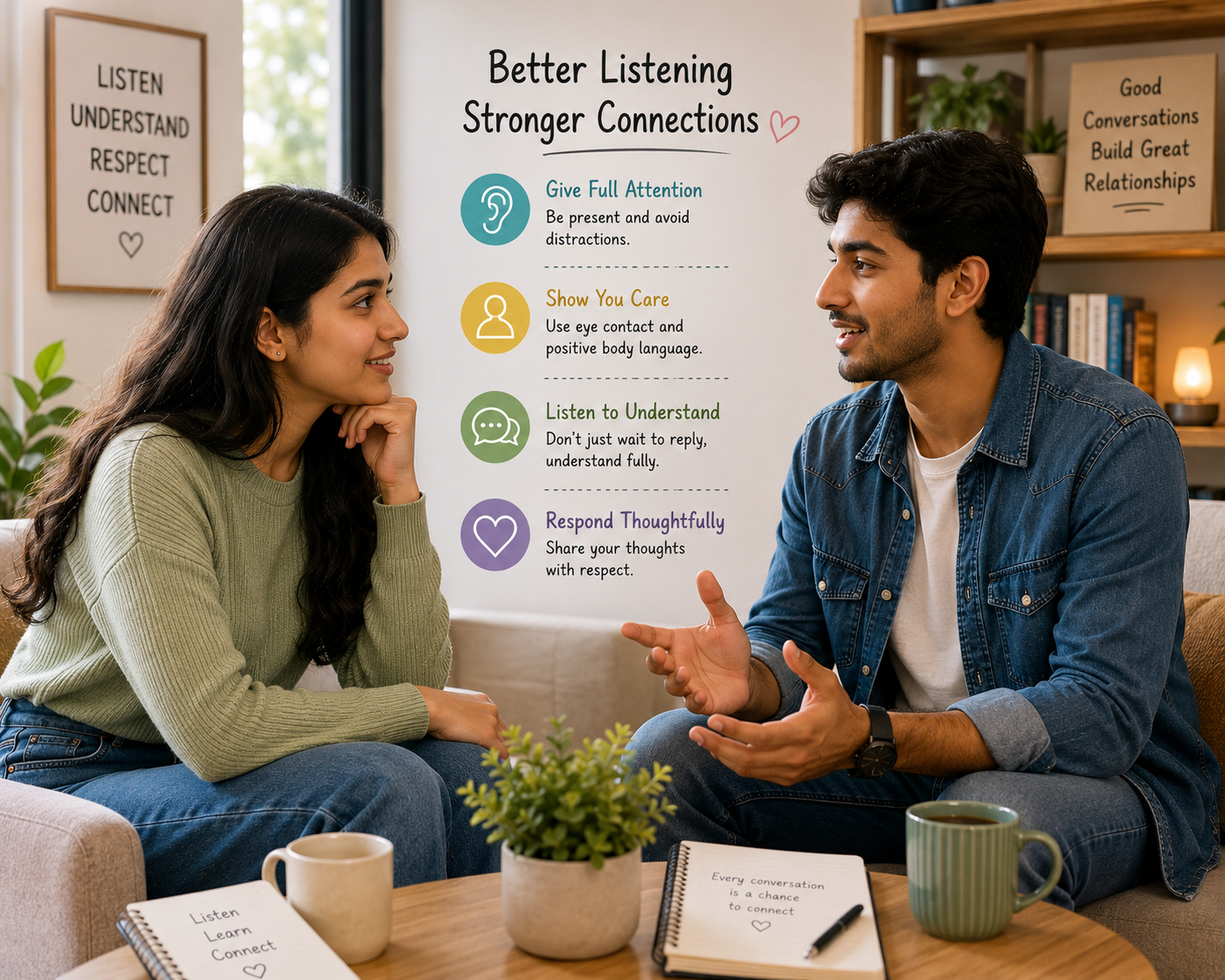
Developing better listening skills can make conversations more meaningful and help you understand people more clearly. Whether you’re talking with a friend, classmate, colleague, family member, or teacher, paying attention can improve the quality of your interactions.
Good communication isn’t only about knowing what to say. Knowing how to listen can be just as important.
During everyday conversations, it’s easy to become distracted, prepare your response while someone is speaking, or assume you already know what the other person means. These habits can create misunderstandings even when nobody intends to cause them.
The good news is that listening is a skill. With regular practice, small changes can make a noticeable difference.
Why Listening Matters
People generally want to feel heard and understood when they communicate.
When someone notices that you’re genuinely paying attention, they may feel more comfortable sharing ideas, concerns, or experiences. On the other hand, constantly checking your phone, interrupting, or quickly changing the subject can make conversations feel one-sided.
Good listening can also prevent unnecessary misunderstandings. Instead of reacting to an assumption, you give yourself time to understand what the other person actually said.
This can be especially useful during disagreements, group discussions, and important conversations.
8 Habits for Better Listening Skills
1. Give the Conversation Your Attention
Your physical presence doesn’t always mean you’re mentally present.
Checking notifications, looking around the room, or thinking about your next task can divide your attention.
When possible, put distractions aside and focus on the person speaking. Maintain natural eye contact without staring continuously, and show through your body language that you’re engaged.
Even a few minutes of genuine attention can make a conversation feel very different.
2. Let People Finish Their Thoughts
Interrupting can happen for many reasons. You may be excited about an idea, remember something relevant, or want to correct a detail.
However, cutting someone off can prevent them from fully explaining what they mean.
Allow the person to finish before responding.
There may be a short pause after they stop speaking. Instead of immediately filling that silence, give yourself a moment to process what you’ve heard.
That small pause can lead to more thoughtful conversations.
3. Avoid Planning Your Reply Too Early
Listening becomes difficult when you’re already preparing your response.
While someone is speaking, your mind may be thinking about what you want to say next rather than processing their actual message.
Try to stay with the conversation instead.
Once the person finishes, take a moment to consider their main point. Then respond based on what they actually said.
This simple change can reduce misunderstandings and make your responses more relevant.
4. Ask Questions When Something Is Unclear
Assuming you understand everything can sometimes create unnecessary confusion.
If someone says something that isn’t clear, ask a respectful question.
You might say:
“Could you explain what you mean?”
or
“Do you mean that this happened before the meeting?”
Questions show that you’re interested in understanding rather than simply waiting for your turn to speak.
They can also help uncover details that might otherwise be missed.
5. Notice Tone and Body Language
Communication involves more than words.
A person’s tone, facial expression, posture, and pace can provide additional context. Someone may say they’re fine while their voice or body language suggests that something is bothering them.
This doesn’t mean you should assume what another person is feeling.
Instead, use these signals as reasons to pay closer attention.
If appropriate, you can gently ask whether everything is okay rather than immediately deciding what their behavior means.
6. Resist the Urge to Immediately Give Advice
When someone shares a problem, your first instinct may be to solve it.
Sometimes advice is useful. At other times, the person may simply want to explain what they’re experiencing.
Before offering a solution, consider asking:
“Do you want advice, or would you like me to listen?”
This simple question can prevent you from giving unwanted suggestions.
Being supportive doesn’t always require fixing the situation. Sometimes, listening patiently is already valuable.
7. Repeat the Main Point in Your Own Words
When a conversation is important, briefly reflecting what you’ve understood can prevent confusion.
For example:
“So you’re saying that the deadline changed and you need more time to finish the project?”
This gives the other person an opportunity to confirm or correct your understanding.
You don’t need to repeat everything they said. Focus on the main idea.
This technique can be especially helpful during workplace discussions, group projects, and emotionally important conversations.
8. Practise Listening Without Judging
People don’t always express themselves perfectly.
Someone may struggle to explain an idea, make a mistake, or describe an experience differently from how you would.
Instead of immediately judging their words, try to understand the perspective behind them.
You can disagree with someone while still listening respectfully.
Keeping an open mind doesn’t mean accepting every opinion. It simply gives you an opportunity to understand before deciding how you feel about what was said.
Better Listening Skills for Students
Students regularly communicate with teachers, classmates, friends, and project partners.
Listening carefully can make lessons easier to understand and group work more efficient.
During a lecture or discussion, focus on the main ideas rather than trying to remember every single sentence. Writing brief notes can help you identify important information.
Group projects also benefit from good listening. Before suggesting your own idea, make sure you understand what your teammates are proposing.
A respectful conversation can help everyone contribute more effectively.
Listening During Disagreements
Listening becomes especially difficult when emotions are strong.
During an argument, you may naturally focus on defending yourself. As a result, you might hear only the parts of the conversation that support your position.
Instead, try to understand the other person’s main concern before responding.
You can say:
“I understand that you’re upset because…”
Then explain what you’ve understood.
This doesn’t mean admitting that the other person is automatically right. It simply creates space for both sides to communicate more clearly.
A calmer conversation is often more productive than trying to win every point.
Common Listening Mistakes
Even people with good communication skills can fall into unhelpful habits.
Frequently checking your phone, interrupting, dismissing someone’s feelings, changing the subject too quickly, and immediately offering solutions can all weaken a conversation.
Another common mistake is pretending to listen while mentally focusing on something else.
You don’t have to become a perfect listener overnight.
Start by identifying one habit that affects your conversations and work on changing it gradually.
Final Thoughts
Developing better listening skills can improve everyday communication without requiring complicated techniques.
Give conversations your attention, allow people to finish, and avoid preparing your response before you’ve understood their message. Ask questions when something is unclear and pay attention to both words and context.
During difficult conversations, remember that listening doesn’t mean agreeing with everything someone says.
It means giving their perspective enough attention to understand it accurately.
Start with your next conversation. Put your phone aside, listen without interrupting, and take a moment before responding.
That small change can make your conversations clearer, calmer, and more meaningful.
For another practical guide, explore How to Handle Criticism Without Losing Confidence.
For additional information about communication and relationships, explore resources from the American Psychological Association.
Frequently Asked Questions On Better Listening Skills
1. What are better listening skills?
Better listening skills involve giving attention, allowing others to speak, asking useful questions, and making an effort to understand their message before responding.
2. How can I become a better listener?
Start by reducing distractions, avoiding interruptions, and focusing on what the other person is actually saying rather than planning your response.
3. Why is listening important for students?
Good listening can help students understand lessons, communicate with classmates, participate in discussions, and work more effectively in groups.
4. Should I always give advice when someone shares a problem?
Not necessarily. Some people want solutions, while others mainly want to feel heard. Asking what kind of support they prefer can make the conversation more helpful.
5. Does listening mean agreeing with someone?
No. You can understand another person’s perspective without agreeing with their opinion. Listening simply gives you a clearer understanding before you respond.