
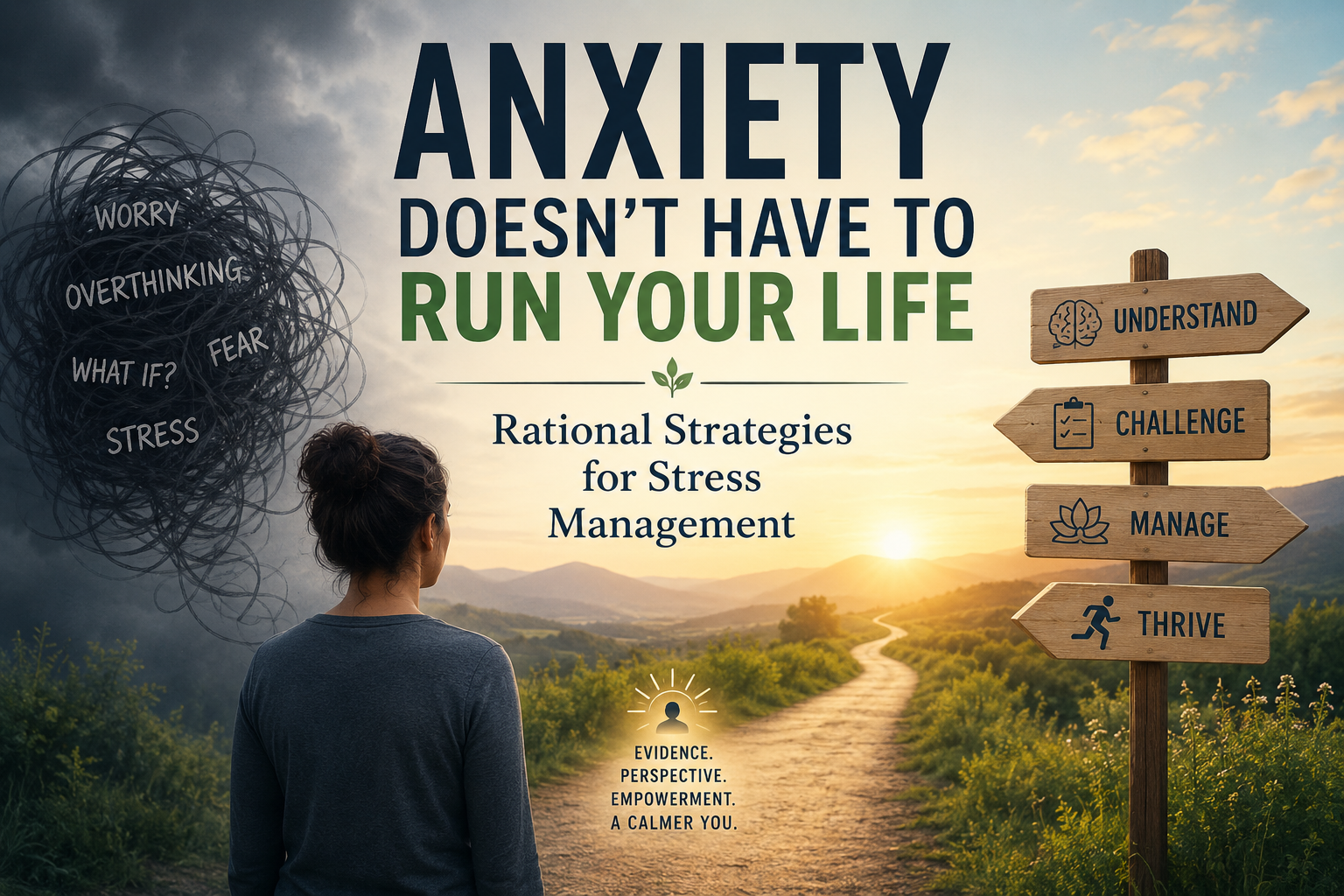
We’ve all felt it — the racing heart, the restless mind, the overwhelming sense that something is about to go wrong. Anxiety and stress are among the most common mental health struggles in the world today, yet they remain deeply misunderstood. The good news? With the right rational tools, you can reclaim control.
Understanding Anxiety vs. Stress
While often used interchangeably, stress and anxiety are different experiences:
- Stress is typically triggered by an external cause — a deadline, a conflict, a life change. It usually eases when the situation resolves.
- Anxiety is more internal — a persistent sense of worry or dread that can linger even when there’s no clear threat present.
Both can be debilitating when left unmanaged. But both are also highly treatable.
Why Our Minds Catastrophize
When we’re stressed or anxious, our brain’s threat-detection system goes into overdrive. It starts to treat a difficult email from your boss the same way it would treat a physical danger. The result? Disproportionate fear, avoidance behavior, and a cycle that feeds on itself.
Rational thinking interrupts this cycle by helping you ask:
- “What is the actual evidence for this fear?”
- “What is the most realistic outcome here?”
- “Have I survived similar situations before?”
These aren’t dismissive questions — they’re powerful anchors back to reality.
5 Rational Strategies to Manage Anxiety & Stress
1. Name It to Tame It Simply labeling your emotion — “I am feeling anxious right now” — activates the rational part of your brain and reduces the emotional intensity. Awareness is always the first step.
2. Challenge the “What If” Spiral Anxiety loves to ask “What if the worst happens?” Counter it with “What if it goes okay?” and “What would I do even if it didn’t?” Building a mental plan reduces the sense of helplessness.
3. Ground Yourself in the Present Anxiety lives in the future. Stress often replays the past. Grounding techniques — like the 5-4-3-2-1 method (name 5 things you see, 4 you hear, 3 you can touch) — bring you back to the only moment you can actually act in: now.
4. Reframe the Stressor Instead of “This is too much for me,” try “This is challenging, but I have handled hard things before.” Language shapes perception, and perception shapes how you feel.
5. Build a Rational Routine Consistent sleep, movement, and moments of stillness are not luxuries — they are the foundation of a resilient mind. Rational self-care is proactive, not reactive.
You Are Not Your Anxiety
Anxiety may be something you experience, but it is not who you are. At Rational Works, we believe that with the right support and practical strategies, every person has the capacity to build a calmer, more grounded life — one rational thought at a time.
Breathe. Think clearly. Move forward.