
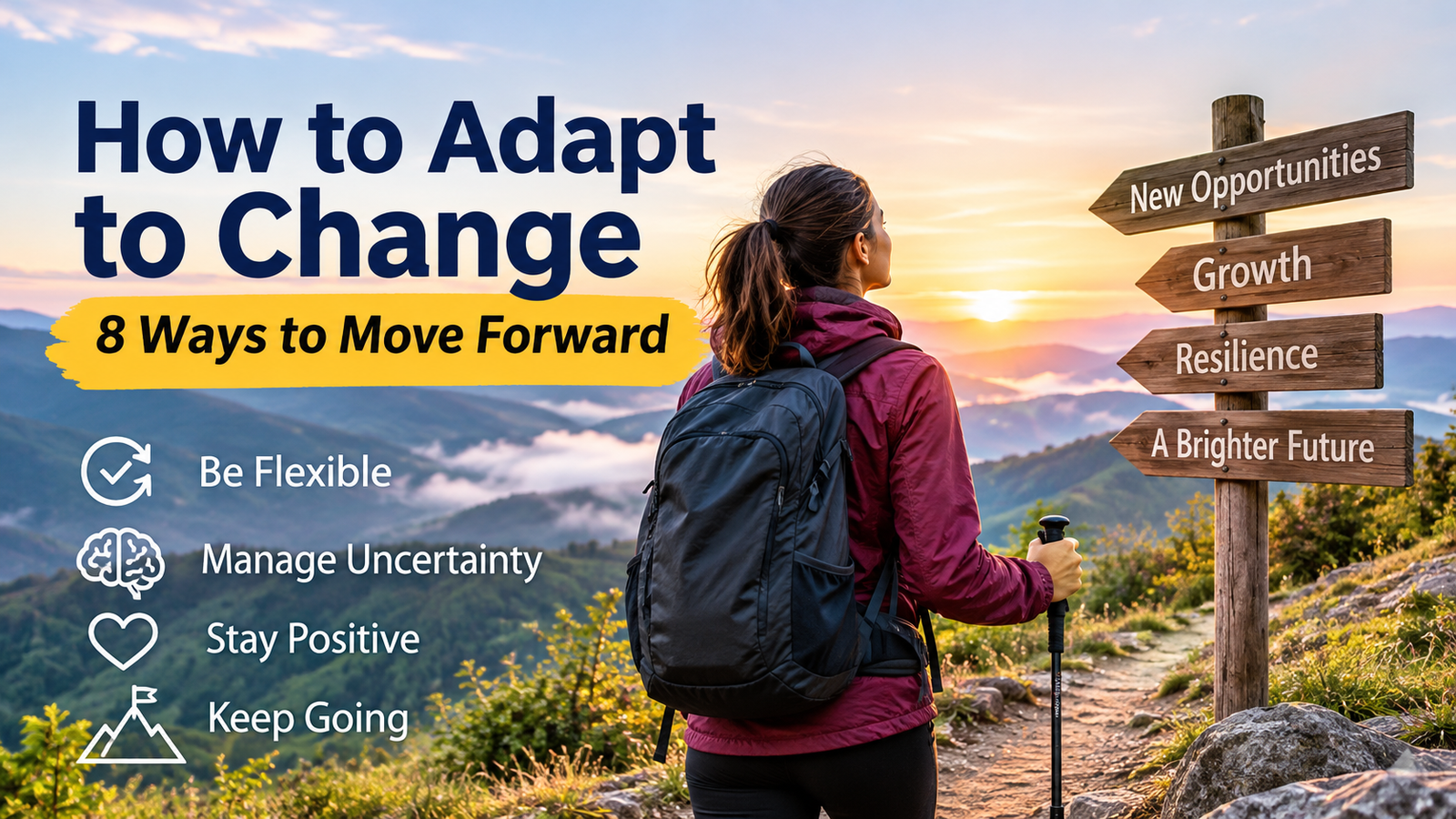
Learning how to adapt to change can help you handle unexpected situations, manage uncertainty, and maintain a sense of direction when life does not go according to plan. Change is a natural part of life. It can involve a new job, a different routine, changing relationships, financial responsibilities, or an unexpected personal challenge.
Even positive changes can feel uncomfortable. A new opportunity may bring unfamiliar responsibilities, while an unexpected situation can make you question what comes next. When familiar routines disappear, it is easy to feel uncertain or overwhelmed.
However, adapting to change does not mean that you must enjoy every situation or remain positive all the time. It means learning to respond thoughtfully, recognise what you can control, and adjust your actions as circumstances develop.
With patience and practical habits, you can become more comfortable with uncertainty and approach new situations with greater confidence.
Why Is Adapting to Change Difficult?
People often develop routines because familiar situations provide a sense of stability. When something changes, those routines may no longer work. You might need to learn new skills, adjust expectations, make difficult decisions, or accept that certain things are outside your control.
Uncertainty can also encourage overthinking. You may spend too much time imagining possible problems instead of focusing on what you can do in the present.
The American Psychological Association describes resilience as the process of adapting to difficult or challenging experiences. Its guide to resilience explains that coping strategies, flexibility, and social support can contribute to positive adaptation.
The aim is not to control every change. It is to develop the ability to respond constructively when change occurs.
8 Ways to Adapt to Change More Effectively
1. Acknowledge Your Feelings
When something changes, your first reaction may involve confusion, disappointment, anxiety, or frustration. These feelings are understandable, particularly when the situation is unexpected.
Trying to suppress every uncomfortable emotion can make it harder to understand what you need. Instead, give yourself time to recognise your reaction.
For example, if you are starting a new job, you may feel excited about the opportunity while also worrying about unfamiliar responsibilities. Both feelings can exist at the same time.
Acknowledging your emotions does not mean allowing them to control your decisions. It gives you a clearer understanding of your experience before deciding how to respond.
2. Focus on What You Can Control
One of the most important skills during uncertain situations is separating what you can influence from what you cannot.
You may not be able to control a company restructuring, another person’s decisions, or an unexpected change in circumstances. However, you can often control how you prepare, what information you gather, and which actions you take next.
For instance, if your work responsibilities change, you can clarify expectations, identify the skills you need, and organise your schedule.
This approach reduces the energy spent worrying about uncontrollable factors. It also helps you direct your attention towards practical solutions.
3. Break Large Changes Into Smaller Steps
A major change can feel overwhelming when you think about everything that needs to happen at once.
Instead of trying to solve the entire situation immediately, divide it into manageable steps.
If you are moving to a new city, your first priorities might include arranging accommodation, understanding transportation, and organising essential documents. Other decisions can be handled later.
Small actions create a clearer sense of direction. They also make progress easier to recognise.
You do not need to understand every detail of your new situation before taking the first useful step.
4. Remain Open to Learning New Skills
Change often introduces situations that require unfamiliar knowledge or abilities. Resisting the learning process can make adjustment more difficult.
Approach new experiences with curiosity rather than assuming that you should already know everything.
A change in your professional role may require different communication skills, technical knowledge, or time-management habits. Similarly, a new personal responsibility may require you to organise your routine differently.
Treat mistakes as opportunities to improve your approach. You will not always get everything right immediately, and that is a normal part of learning.
A willingness to develop new skills can make unfamiliar situations feel more manageable over time.
5. Maintain Healthy Daily Routines
During periods of change, familiar habits can provide a sense of stability. Although some routines may need to change, maintaining a few consistent activities can help you feel more grounded.
Try to protect basic habits such as getting enough sleep, eating balanced meals, moving your body, and taking regular breaks.
You can also maintain small activities that bring comfort, such as reading, journaling, spending time outdoors, or speaking with someone you trust.
These habits will not remove every challenge. However, they can support your overall well-being while you adjust to new circumstances.
6. Ask for Support When You Need It
Adapting to change does not require handling every difficulty alone. Talking to someone you trust can help you understand your feelings, consider different perspectives, and identify practical solutions.
For example, a colleague may help you understand a new workplace process, while a friend may provide reassurance during a personal transition.
Be clear about the kind of support you need. Sometimes you may want advice, while at other times you may simply need someone to listen.
If a change creates ongoing distress or significantly affects your daily functioning, seeking help from a qualified mental health professional can also be valuable.
7. Adjust Your Expectations
One reason change feels difficult is that we sometimes expect ourselves to adjust immediately.
You may believe that you should feel confident in a new role within a few days or become comfortable with a different routine straight away. When that does not happen, you might interpret normal adjustment difficulties as personal failure.
Give yourself realistic expectations. Some changes require time, experimentation, and repeated effort before they begin to feel familiar.
You may also need to revise your goals as circumstances develop. Adjusting a plan does not mean abandoning your ambitions. It means recognising what is practical and choosing a better way forward.
8. Reflect on What the Experience Can Teach You
Every change offers an opportunity to understand yourself and your priorities more clearly.
Once you have had time to adjust, reflect on what the experience has taught you. Perhaps you discovered that you handle uncertainty better than expected, need stronger boundaries, or benefit from asking for support earlier.
You may also recognise habits that no longer serve your needs.
Reflection helps you turn experience into practical learning. Rather than focusing only on what was difficult, consider which skills and insights you can carry into future situations.
How to Adapt to Change at Work
Workplace changes can affect your responsibilities, relationships, schedule, and professional confidence. A new manager, different team structure, revised targets, or unfamiliar technology may require you to adjust your approach.
Start by understanding what has changed and what is expected from you. Ask relevant questions rather than relying on assumptions. If new skills are required, create a realistic learning plan and seek feedback as you progress.
It is also useful to remain flexible without accepting every demand without consideration. Communicate your workload, clarify priorities, and maintain reasonable boundaries.
Professional adaptability does not mean saying yes to everything. It means responding constructively while recognising your capabilities and limitations.
How to Stay Emotionally Balanced During Personal Changes
Personal changes can be especially challenging because they may affect your sense of identity, relationships, and future expectations.
During these periods, avoid pressuring yourself to make every decision immediately. Give yourself space to process what has happened and consider which priorities matter most.
Maintaining a supportive environment can also make adjustment easier. Creating a peaceful space at home, for example, can provide a familiar place to rest and reflect. You can explore more ideas in creating a peaceful home environment.
Remember that emotional adjustment is not always linear. You may feel comfortable one day and uncertain the next. That does not mean you are moving backwards.
Final Thoughts
Learning how to adapt to change is an important part of personal growth. Life will continue to bring unfamiliar situations, unexpected responsibilities, and new opportunities. Although you cannot prepare for every possibility, you can develop habits that help you respond with greater clarity.
Acknowledge your feelings, focus on what you can influence, and approach unfamiliar experiences with patience. Maintain supportive routines, ask for help when necessary, and allow yourself time to learn.
Most importantly, remember that adapting does not require becoming a completely different person. It means finding practical ways to move forward while staying connected to your values and well-being.
Frequently Asked Questions
1. Why is it important to adapt to change?
Adapting to change helps you respond to new situations, manage uncertainty, develop useful skills, and make decisions that reflect your current circumstances.
2. How can I become more comfortable with change?
Start with small adjustments, acknowledge your feelings, remain open to learning, and avoid expecting yourself to feel comfortable immediately. Consistent practice can make unfamiliar situations easier to handle.
3. How do I deal with unexpected changes in life?
Give yourself time to understand the situation, identify what you can control, and break necessary actions into smaller steps. Talking to someone you trust can also help you gain perspective.
4. How can I adapt to change at work?
Clarify new expectations, communicate with your team, learn required skills, and organise your priorities. Be open to new approaches while maintaining healthy professional boundaries.
5. Does adapting to change mean accepting everything?
No. Adapting means responding constructively to circumstances. You can adjust your plans while still questioning unfair expectations, setting boundaries, and making decisions that protect your well-being.