
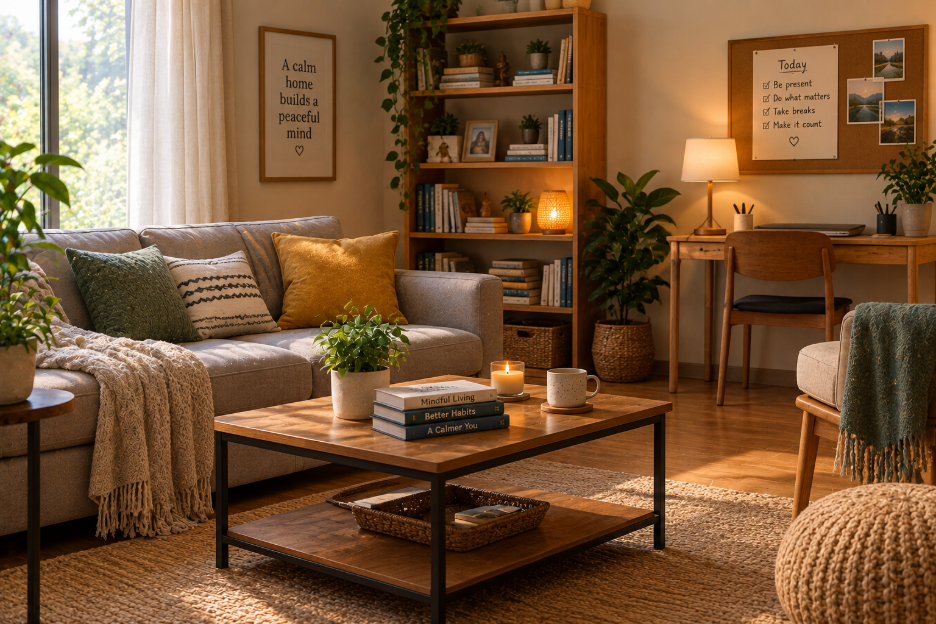
Creating a peaceful home environment does not require expensive furniture, a complete renovation, or a perfectly organized house. Small changes to your surroundings can make everyday life feel calmer and more comfortable.
Your home is more than a place to sleep or store your belongings. It is where you begin and end most days, recover from responsibilities, spend time with people you care about, and have moments to yourself.
Noise, clutter, unfinished tasks, poor organization, and constant digital distractions can make your home feel mentally crowded. Fortunately, creating a calmer space can start with simple changes that are easy to maintain.
8 Ways to Create a Peaceful Home Environment
1. Clear the Clutter You Notice Every Day
Clutter does not mean your entire home needs to be messy. Sometimes, a few consistently crowded areas can create a sense of disorder.
Look at the places you use most often. A crowded kitchen counter, overflowing entryway, messy desk, or pile of clothes can become a constant reminder of unfinished tasks.
Start with one small area instead of trying to organize everything at once. Remove items that do not belong there and give frequently used belongings a consistent place.
A clearer environment can make everyday routines easier. You may spend less time searching for things or thinking about what needs to be organized.
2. Create a Quiet Corner
Every home can benefit from having at least one place where you can slow down.
This does not need to be an entire room. A comfortable chair near a window, a small corner of the bedroom, or a simple balcony space can work just as well.
Keep the area relatively free from work materials and unnecessary distractions. Use it for reading, thinking, stretching, listening to music, or simply sitting quietly.
Having a dedicated quiet space reminds you that your home is also a place for rest and recovery.
3. Make Your Bedroom More Restful
Your bedroom should feel like a place where your mind can gradually switch off.
Keep unnecessary items away from the immediate sleeping area when possible. Reduce harsh lighting in the evening and avoid turning your bed into a workspace if you have another option.
Simple details can also influence how the room feels. Clean bedding, a comfortable temperature, and an organized nightstand can make the space more inviting.
You do not need a perfect bedroom. The goal is to create a comfortable space that feels connected with rest.
4. Reduce Unnecessary Noise
Noise can make a home feel busy even when nothing else is happening.
Television, constant notifications, loud conversations, appliances, and background audio can make it difficult to experience genuine quiet.
Consider creating certain periods of the day when unnecessary noise is reduced. You might turn off the television when nobody is watching or silence nonessential notifications.
Quiet does not have to fill the entire day. Even short periods without constant stimulation can make your surroundings feel calmer.
5. Give Everyday Items a Home
A peaceful home environment is easier to maintain when frequently used items have obvious places to return to.
Keys, chargers, shoes, documents, kitchen equipment, and other belongings can quickly create disorder when they are left wherever they were last used.
Choose storage locations based on how you actually move through your home. Keep things close to where you use them instead of creating complicated systems that are difficult to maintain.
When returning an item takes only a few seconds, staying organized becomes much easier.
6. Separate Work From Personal Space
Working from home can make the boundary between professional responsibilities and personal life less clear.
If possible, create a distinction between work areas and spaces used for relaxation. Even without a separate office, a specific desk or section of a room can become your designated work area.
At the end of the workday, put away work-related materials and close unnecessary tabs or devices.
This small transition can create a clearer mental separation between work time and home time. Your home should also be a place where you can relax without constantly thinking about unfinished work.
7. Add Things That Make Your Space Feel Personal
Peacefulness does not mean making your home empty or minimalist.
Personal objects can make a space feel warm and familiar. Photos, artwork, books, plants, meaningful gifts, comfortable furniture, or objects connected to positive memories can give your surroundings a sense of identity.
Choose things because they make you feel comfortable rather than simply following a design trend.
Your home should feel like your space. Personal touches can make ordinary rooms feel more welcoming.
8. Build Simple Reset Habits
Maintaining a peaceful home environment is often easier than creating one from scratch.
Small reset habits can prevent disorder from building up. Spend five minutes putting things away after dinner, clear the main living area before bed, or prepare commonly used items for the following morning.
Keep the habit realistic. A routine that takes a few minutes and happens consistently can be more useful than an ambitious cleaning schedule that becomes difficult to maintain.
Small resets can also reduce the feeling that you need to spend an entire weekend fixing everything at once.
Making Your Home Feel Peaceful Without Making It Perfect
A peaceful home environment does not mean everything must always be clean, quiet, and perfectly arranged.
Real homes become messy. Plans change. Guests arrive. Work becomes demanding. Everyday life naturally creates some disorder.
The goal is not perfection. Instead, focus on creating surroundings that support the way you want to live.
Ask yourself what makes your home feel unnecessarily stressful.
Perhaps there is too much clutter near the entrance. Maybe evenings are too noisy. You may not have a comfortable place to sit quietly.
Identify one problem and make one practical change.
Over time, these small improvements can change the overall atmosphere without creating another long list of responsibilities.
How to Create a Peaceful Home Environment in a Small Space
You do not need a large home to create a calmer environment.
Focus on making small areas functional and comfortable. A single chair, shelf, desk, or corner can become a useful personal space.
Use the space you already have rather than trying to create more.
For example, you could keep one corner free from work materials and use it for reading or relaxing. You could also reduce visible clutter by giving frequently used items simple storage locations.
Small spaces can still feel comfortable when they are organized around your everyday needs.
Simple Habits for Maintaining a Peaceful Home Environment
Creating a calm space is only the first step. Simple habits can help you maintain it.
- Put frequently used items back after using them.
- Clear one visible surface each evening.
- Reduce unnecessary background noise.
- Keep work materials in one designated area.
- Spend a few quiet minutes without your phone.
- Prepare important items for the next morning.
- Avoid trying to clean the entire home at once.
The goal is consistency rather than perfection.
Final Thoughts
Creating a peaceful home environment can support everyday well-being by making your surroundings feel more comfortable and manageable. Learn more about mental health and well-being from the American Psychological Association.
Clear the clutter you constantly notice. Create a quiet corner. Make your bedroom restful and reduce unnecessary noise. Give everyday belongings practical homes and create a clearer boundary between work and relaxation.
You can also make your space more welcoming by adding personal objects that bring comfort and positive memories.
You do not need to change everything at once. Start with one small area, make one useful improvement, and build from there.
A peaceful home is created through small choices that make everyday life feel a little lighter.
For more ideas about building a calmer and more balanced life, explore Building Self-Awareness.
Frequently Asked Questions About a Peaceful Home Environment
Does a peaceful home need to be minimalist?
No. A peaceful home can contain plenty of belongings. What matters more is whether your surroundings feel manageable, comfortable, and suited to your needs.
How can I make my home feel calmer quickly?
Start with one frequently used area. Clear visible clutter, reduce unnecessary noise, and create a small space where you can sit without distractions.
What if I do not have much space?
You do not need a large home. Focus on making small areas functional and organized. A single chair, shelf, or corner can become a useful personal space.
How do I maintain a peaceful home?
Simple maintenance habits are usually easier to follow than occasional major cleaning sessions. Returning items to their places, reducing unnecessary clutter, and doing short daily resets can help maintain a calmer environment.
Can a peaceful home improve mental well-being?
A calmer and more organized environment may make everyday routines feel easier and reduce some sources of distraction. Your surroundings are only one part of overall well-being, but small environmental changes can support healthier daily habits.