
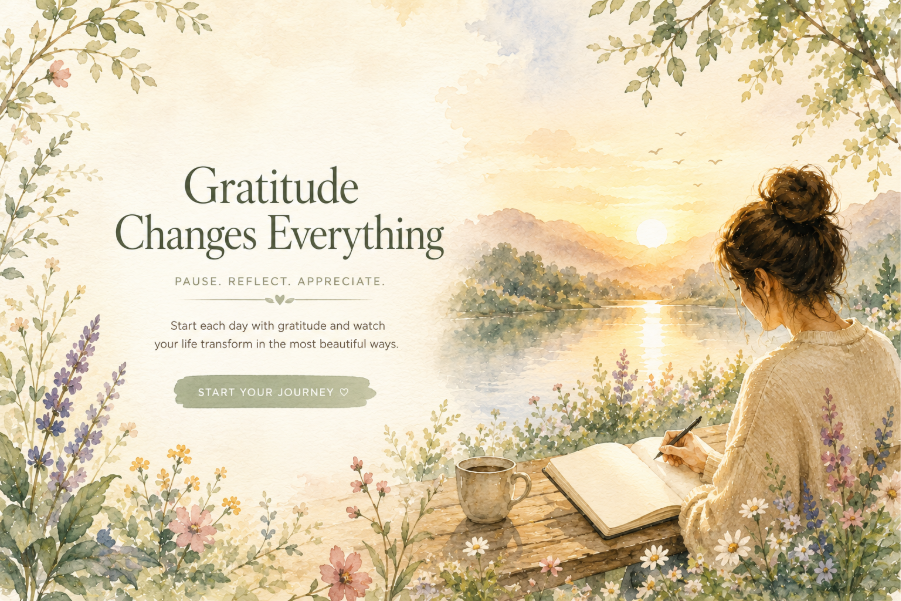
Gratitude practice is one of the simplest ways to improve your mental well-being and develop a more positive outlook on life. Many people spend their time focusing on problems, responsibilities, and things they wish were different.
Fortunately, gratitude is a habit anyone can develop.
The good news is that gratitude is a habit anyone can develop. Small moments of appreciation practiced consistently can improve emotional balance, reduce stress, and help you feel happier over time.
In this guide, you’ll learn why gratitude matters and discover ten simple habits that can help you build a lasting gratitude practice.
Why Gratitude Matters
Gratitude changes the way you view everyday life.
This simple shift in perspective can improve your mood and help you respond to challenges with greater resilience.
Practicing gratitude doesn’t require major life changes.
Benefits of Gratitude Practice
Some of the benefits include:
- Reduces everyday stress.
- Improves emotional well-being.
- Encourages a positive mindset.
- Strengthens relationships.
- Supports better sleep.
- Helps you appreciate everyday moments.
- Promotes greater life satisfaction.
Signs You Need More Gratitude
- Focus mainly on problems.
- Compare yourself with others frequently.
- Feel dissatisfied even after achieving goals.
- Find it difficult to enjoy the present moment.
- Worry about things outside your control.
- Overlook your daily accomplishments.
- Rarely acknowledge positive experiences.
Fortunately, recognizing these patterns is the first step toward creating a healthier mindset.
10 Daily Habits for a Happier Mind
1. Write Three Things You’re Thankful For
Take a few minutes each day to write down three things you appreciate.
2. Appreciate Small Moments
Not every meaningful experience is a major event.
Notice the beauty of a sunrise, a relaxing walk, or a quiet cup of coffee.
Small moments often bring lasting happiness.
3. Thank Someone Personally
Expressing appreciation strengthens relationships.
Tell a family member, friend, or colleague why you value them.
Simple words of gratitude can make a meaningful difference.
4. Celebrate Daily Progress
Every small achievement deserves appreciation.
5.Choose Gratitude During Tough Times
Even difficult situations can teach valuable lessons.
Ask yourself what you learned or how the experience helped you grow.
This habit encourages resilience and emotional balance.
6. Limit Negative Comparisons
Comparing yourself with others often reduces happiness.
Instead, focus on your own progress and appreciate the journey you’re creating.
7. Reflect Before Bed
Spend a few quiet minutes each evening remembering the positive experiences from your day.
Ending the day with gratitude encourages a calmer and more optimistic mindset.
8. Share Gratitude with Others
Talk about positive experiences with family and friends.
Sharing gratitude creates stronger relationships and encourages meaningful conversations.
9. Make Gratitude Part of Your Routine
Choose a regular time each day to practice gratitude.
10. Keep a Gratitude Journal
Writing regularly helps you recognize patterns of positivity.
Over time, a gratitude journal becomes a reminder of how many meaningful moments you’ve experienced.
If you’d like to deepen your daily reflection, read our guide on 5 Journaling Prompts for Stress Relief That Actually Work.
Build a Lasting Gratitude Practice
Developing gratitude doesn’t require extra time or complicated routines.
Start with one habit from this guide and practice it consistently. As gratitude becomes part of your daily life, you’ll notice greater appreciation, improved emotional well-being, and a more positive outlook.
Small moments of thankfulness create meaningful changes over time.
Final Thoughts
Gratitude practice is a simple habit with lasting benefits.
By appreciating the positive experiences already present in your life, you can reduce stress, improve relationships, and develop a happier mindset.
Begin with one small habit today and continue building your gratitude practice one day at a time.
For more information about gratitude and well-being, visit the Greater Good Science Center (UC Berkeley).
Frequently Asked Questions
What is gratitude practice?
Gratitude practice is the habit of regularly appreciating the positive people, experiences, and opportunities in your life.
How often should I practice gratitude?
Practicing gratitude for just a few minutes each day can improve emotional well-being and help develop a more positive mindset.
Does gratitude help reduce stress?
Yes. A regular gratitude practice can reduce stress, strengthen emotional resilience, and improve overall happiness over time.
Conclusion
Developing gratitude is one of the simplest ways to improve your daily life.
Rather than waiting for perfect circumstances, appreciate the positive moments that already exist. Small acts of gratitude practiced consistently can strengthen your emotional well-being, improve your relationships, and help you approach each day with greater optimism.