
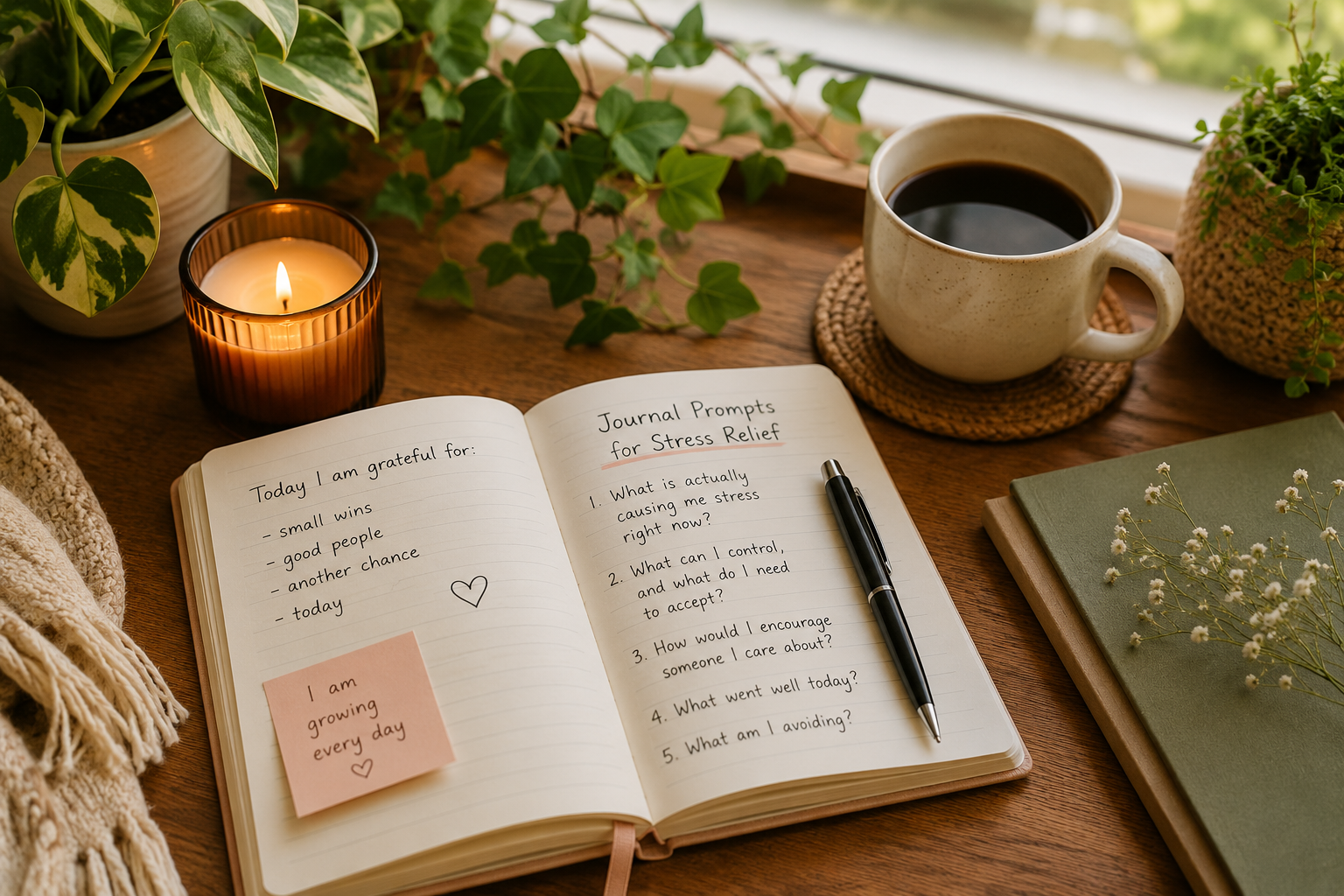
Journaling prompts for stress relief can help you move beyond simply writing about your day. Instead of repeating the same worries, these guided questions encourage self-reflection, emotional clarity, and healthier ways to process stress. Whether you’re new to journaling or looking to deepen your practice, the right prompts can make a meaningful difference to your mental well-being.
Without direction, journaling can turn into circular thinking: the same worries, written down instead of solved. The prompts below are designed to fix that. Each one gives your mind a specific question to answer, so you move from venting to understanding — which is where real stress relief comes from.
At Rational Works, we recommend journaling because it supports mindfulness, emotional awareness, and healthier stress management. Use any of these five prompts today to start processing stress with more clarity.
1.What Is Actually Causing Me Stress Right Now?
Stress often feels bigger than it is because our thoughts stay scattered across a dozen half-formed worries. Instead of writing about everything going wrong, pick one specific concern and dig into it:
- What happened today that affected me the most?
- Why did it stay on my mind?
- What emotions am I feeling because of it?
Naming the real source of your stress — instead of the vague feeling of “everything” — makes it far easier to decide what to do next.
2. What Can I Control, and What Do I Need to Accept?
Feeling overwhelmed often comes from trying to manage things outside your influence. Draw a line down the middle of a page and sort your stress into two columns:
Things I Can Control
- My actions
- My attitude
- My priorities
- My next step
Things I Can’t Control
- Other people’s opinions
- Unexpected events
- The past
- Every possible outcome
This exercise shifts your energy away from frustration and toward action you can actually take — one of the simplest ways to make a stress-relief journaling habit stick.
3. How Would I Encourage Someone I Care About?
Most of us talk to ourselves far more harshly than we’d ever talk to a friend. Try this reframe: imagine someone you love came to you feeling exactly as you do right now.
- What advice would I give them?
- How would I comfort them?
- What would I remind them about their strengths?
Now read those words back to yourself. The compassion you’d offer someone else is usually exactly what you need to hear.
4.What Went Well Today?
Stress pulls your attention toward problems, so the good moments quietly slip by unnoticed. Spend a few minutes listing what actually went well — even small things count:
- Completing an important task
- Having a meaningful conversation
- Taking time to rest
- Solving a small problem
- Spending quality time with family
Regularly noticing small wins builds a more balanced mindset and strengthens emotional resilience over time.
5. What Am I Avoiding?
Sometimes the biggest source of stress is the exact thing we don’t want to write about. Ask yourself:
“What am I reluctant to write about today?”
You don’t need perfect sentences — a few honest lines are enough to start reducing the emotional weight you’ve been carrying. Naming a difficult thought is often the first step toward managing it.
How Journaling Prompts for Stress Relief Build a Lasting Habit
You don’t need a special notebook or an hour of free time. All it takes is a notes app, a quiet five minutes, and one prompt. Try journaling:
- For five minutes each morning
- Before bed
- After a stressful meeting
- During a quiet coffee break
Consistency matters more than length. A few honest sentences written regularly will do more for your stress levels than pages written once a month.
Why Guided Journaling Works for Stress Relief
One of the greatest benefits of journaling prompts for stress relief is that they provide structure when your thoughts feel overwhelming. Instead of dwelling on worries, these prompts guide your attention toward reflection, problem-solving, and emotional awareness. Over time, this simple practice can help you manage stress more effectively and build greater resilience in everyday life.
Writing slows racing thoughts and creates space for reflection. Instead of carrying a dozen worries at once in your head, journaling lets you examine one thought at a time — improving self-awareness, emotional regulation, and mental clarity while building healthier daily stress responses.
Journaling isn’t about finding perfect answers. It’s about giving yourself permission to pause, reflect, and understand your own experience a little better each day.
How Rational Works Supports Everyday Well-Being
Looking for more ways to strengthen your mental well-being? Read our guide on Vagus Nerve Regulation: A Natural Guide to Stress Relief to learn how simple daily habits support a calmer mind and healthier stress response.
These journaling prompts for stress relief are designed to help you process emotions, reduce mental clutter, and develop healthier coping habits through regular self-reflection. By answering one thoughtful question at a time, you can better understand your feelings, improve emotional resilience, and develop a healthier response to everyday stress.
Every page you write is another small step toward greater self-awareness, resilience, and emotional balance.
Start Today
Pick one prompt above and give yourself five honest minutes. Your journal doesn’t need perfect words — just your authentic thoughts. Small, consistent moments of reflection can lead to meaningful, lasting changes in how you handle stress.
Frequently Asked Questions Journaling Prompts For Stress Relief
How can journaling help reduce stress?
Journaling gives you a safe space to express thoughts and emotions in writing. Regular practice helps you organize your feelings, identify stress triggers, gain perspective, and build healthier coping habits.
How often should I journal for stress relief?
There’s no fixed rule. Journaling a few times a week — or even five to ten minutes daily — can provide meaningful benefits. Consistency matters more than length or frequency.
Do I need to be a good writer to journal?
Not at all. Journaling isn’t about grammar or polished sentences. It’s a personal practice for reflection and emotional clarity — write however feels natural to you.
What’s the best time of day to journal?
Whatever fits your routine. Many people journal in the morning to set intentions for the day, or in the evening to unwind and process what happened.