
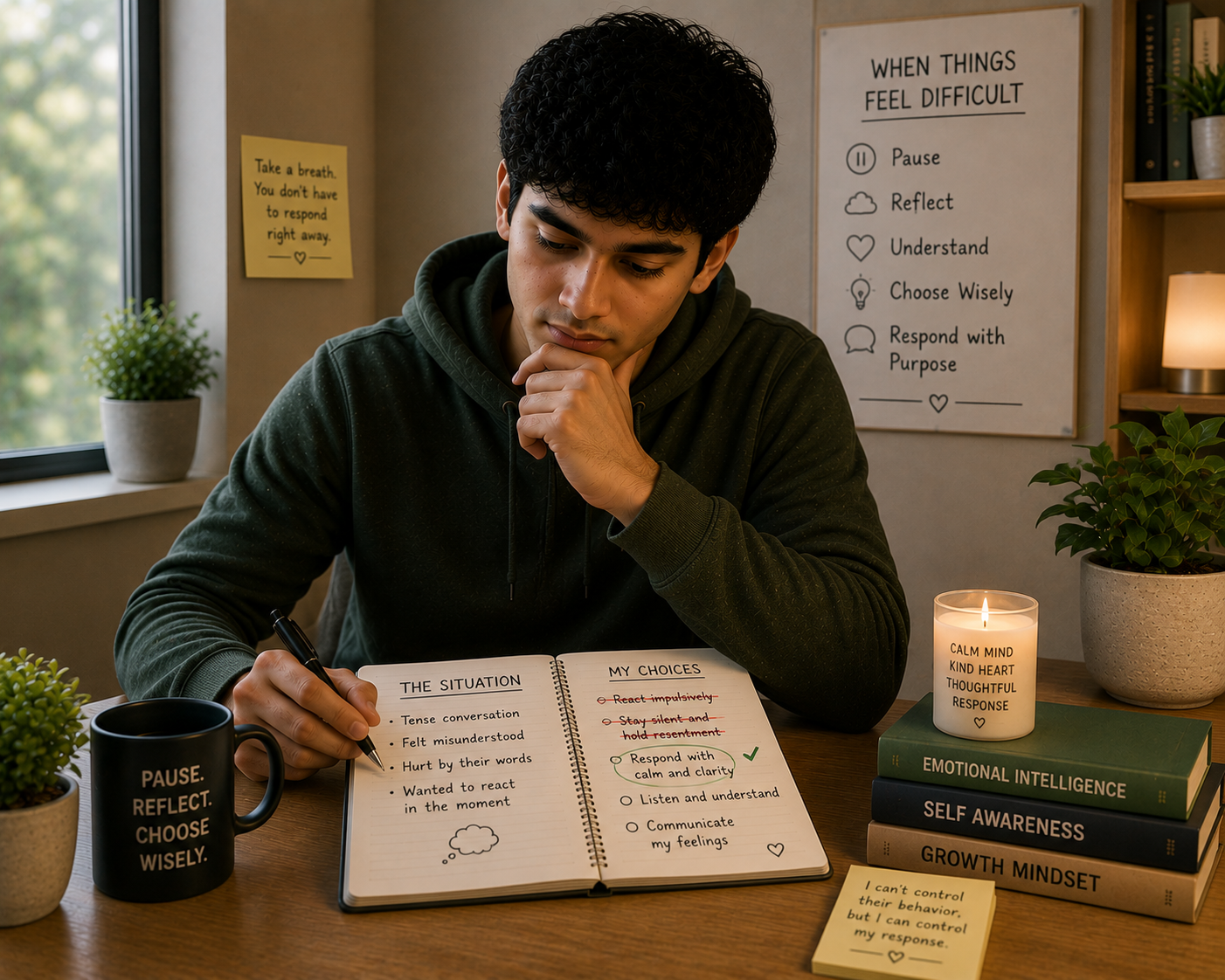
Learning to stop taking things personally can change the way you handle everyday conversations, criticism, misunderstandings, and difficult situations. A delayed reply may make you wonder if someone is upset. A short comment might stay in your mind all day. Even a small disagreement can sometimes feel like a judgment of who you are.
The truth is that other people’s behavior does not always have something to do with you. People have their own pressures, moods, priorities, expectations, and struggles. Their actions may reflect what is happening in their lives rather than what they think about you.
That doesn’t mean you should ignore disrespect or pretend that hurtful behavior doesn’t matter. Instead, the goal is to develop enough perspective to know when something deserves your attention and when it is better to let it go.
Here are eight practical ways to build that perspective.
1. Pause Before Assuming the Worst
Our minds often try to explain situations before we have all the information.
Someone doesn’t respond to your message, and you assume they are avoiding you. A coworker sounds distracted, and you believe they are annoyed. A friend changes their plans, and you start questioning the relationship.
There could be many explanations.
Before deciding what something means, take a moment and ask:
“Do I actually know why this happened?”
A short pause can prevent an assumption from becoming an unnecessary emotional reaction.
2. Separate Facts From Your Interpretation
Facts and interpretations are not the same thing.
For example:
Fact: Someone didn’t reply to your message.
Interpretation: They don’t respect you.
The first statement describes something you know. The second adds meaning that may or may not be accurate.
When you feel upset by someone’s behavior, identify what actually happened first. Then consider the story you have created around it.
This simple habit can help you stop taking things personally because it prevents your mind from treating assumptions as facts.
3. Remember That People Have Their Own Problems
Everyone carries things that other people cannot see.
Someone who seems impatient may be dealing with a stressful day. A person who appears distant might have something completely unrelated occupying their mind. Even a normally friendly person can occasionally behave differently because they are tired or overwhelmed.
Understanding this doesn’t excuse genuinely harmful behavior.
It simply reminds you that you are not always the center of another person’s experience.
Giving people room for their own circumstances can help you avoid turning every unusual interaction into a personal issue.
4. Don’t Let One Opinion Define You
Criticism can feel especially painful when it touches an area where you already feel uncertain.
Someone may dislike your decision, question your approach, or disagree with your opinion. That doesn’t automatically mean their judgment accurately describes you.
Consider the source and the usefulness of the feedback.
Constructive criticism may reveal something worth improving. An unfair comment may reveal more about the other person than it does about you.
You can listen without absorbing every opinion as part of your identity.
5. Stop Trying to Read Other People’s Minds
Mind-reading is one of the easiest ways to create unnecessary stress.
You may think someone is judging you, secretly dislikes you, or believes you made a mistake. Yet unless they have clearly communicated those thoughts, you cannot know for certain.
Instead of asking yourself, “What are they thinking about me?”, focus on what you actually know.
If the situation matters, communicate directly. A simple conversation can provide more clarity than hours of analyzing someone’s tone, expression, or message.
Clarity is usually more useful than speculation.
6. Give Yourself Time Before Responding
Strong emotions can make situations appear larger than they really are.
When you feel angry, embarrassed, rejected, or offended, an immediate response may come from emotion rather than perspective. Sending a message in that moment can sometimes create a second problem.
Give yourself some breathing room.
Step away from the conversation. Take a walk. Write down what you want to say. Return to the situation once the strongest emotion has settled.
Taking time doesn’t mean avoiding the issue. It means giving yourself a better chance to respond thoughtfully.
7. Choose What Deserves Your Energy
Your attention is limited, so not every situation deserves hours of thought.
A passing comment may not need an explanation. A minor disagreement may not need to become an argument. Someone else’s temporary mood may not deserve a place in your entire day.
Ask yourself:
“Will this still matter to me next week?”
If the answer is yes, take appropriate action.
If the answer is no, allowing the situation to pass may be the healthier choice.
Letting go isn’t the same as weakness. Sometimes it is simply a decision to spend your energy on things that genuinely matter.
8. Build Confidence in Who You Are
A stronger sense of self makes other people’s opinions easier to handle.
Take time to understand your values, priorities, strengths, and areas where you still need to grow. When you know what matters to you, disagreement becomes less threatening.
Someone can dislike your choice without making that choice wrong.
Another person can misunderstand you without changing who you are.
Real confidence doesn’t mean believing you are always right. It means being willing to consider another perspective without immediately abandoning your own.
Not Everything Is About You
Learning to stop taking things personally doesn’t mean becoming emotionless or ignoring genuine problems.
Some situations deserve attention. Repeated disrespect, broken trust, manipulation, or crossed boundaries should not simply be dismissed as something you are “taking personally.”
The real skill is learning to tell the difference between a situation that requires action and one that only requires perspective.
The next time someone’s words or behavior bothers you, slow down before reacting. Look at the facts. Question your assumptions. Consider what else might be happening.
Most importantly, remember that someone else’s opinion is only one perspective—not a definition of your worth.
With practice, you can become calmer, more thoughtful, and less affected by things that don’t deserve control over your peace.
Frequently Asked Questions On Stop Taking Things Personally
Why do I take things personally so easily?
You may connect other people’s behavior with your own worth or assume you know what their actions mean. Stress, uncertainty, and past experiences can also make ambiguous situations feel more personal.
How can I stop overthinking someone’s behavior?
Start by separating what actually happened from what you believe it means. Consider other possible explanations and avoid assuming you know what the other person is thinking.
Does not taking things personally mean ignoring disrespect?
No. You can recognize disrespect and set appropriate boundaries without allowing assumptions or emotional reactions to control your response.
How can I handle criticism without feeling hurt?
Listen for useful information instead of treating criticism as a judgment of your entire character. Keep what helps you improve and let go of opinions that are unfair or unhelpful.