
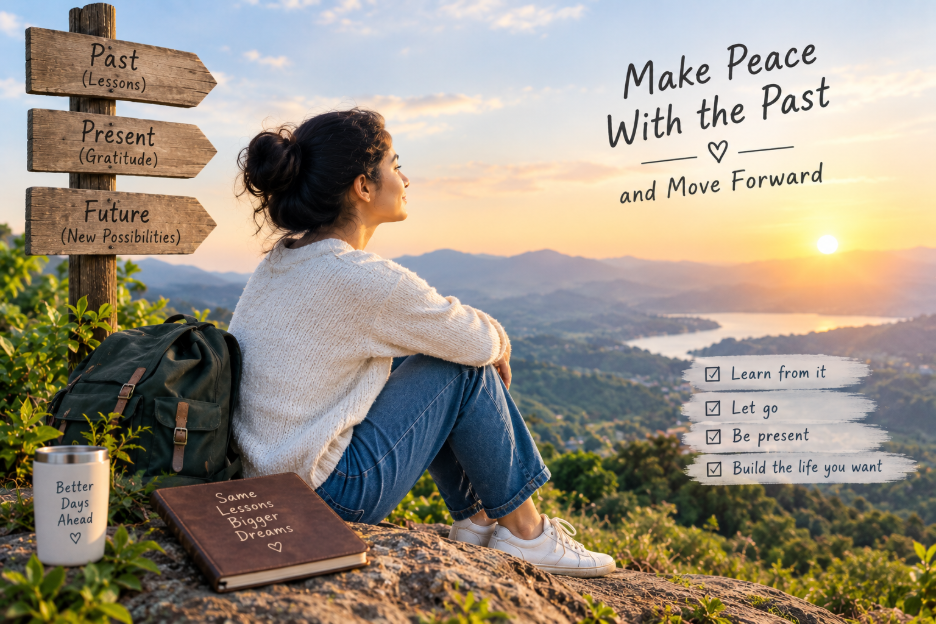
The past can shape who you are without controlling who you become. Old mistakes, disappointments, broken relationships, missed opportunities, and difficult experiences can stay in your thoughts long after they have ended. Learning to make peace with the past does not mean forgetting what happened or pretending it did not matter. It means accepting what cannot be changed and deciding how you want to move forward.
Moving on is rarely one dramatic decision. More often, it happens through small changes in how you think about old experiences and how much power you continue to give them.
If you want to make peace with the past, start by focusing on what you can learn, release, and change today.
8 Ways to Make Peace With the Past
1. Accept That the Past Cannot Be Changed
One of the hardest parts of moving forward is wishing you could rewrite something that has already happened.
You may think about what you should have said, what you should have done differently, or what you wish another person had done. These thoughts can make the past feel unfinished.
Acceptance does not mean approving of what happened. It simply means recognizing that the event itself cannot be changed.
Instead of repeatedly asking, “Why did this happen?” try asking, “What can I do now?”
The past deserves acknowledgment, but it does not need to become a permanent place to live.
2. Stop Replaying Every Mistake
Regret can become repetitive when your mind keeps returning to the same moment.
Thinking about a mistake can be useful when it helps you understand what went wrong. Replaying it endlessly, however, rarely changes the outcome.
Ask yourself what the experience has already taught you.
Perhaps you learned to communicate more clearly, recognize warning signs, plan differently, or make decisions more carefully. Once you have taken the lesson, continuing to punish yourself may not add anything valuable.
A mistake can become part of your experience without becoming your identity.
3. Separate the Experience From Your Identity
Something that happened to you is not necessarily a definition of who you are.
A failed relationship does not make you incapable of love. A poor decision does not make you a bad person. A missed opportunity does not mean you will always miss opportunities.
Old experiences can influence how you see yourself, especially when you attach permanent labels to them.
Instead of saying, “I always make bad decisions,” ask, “What can I learn about how I make decisions?”
Changing the way you speak to yourself can help create distance between who you are today and what happened before.
4. Allow Yourself to Grieve What You Lost
Making peace with the past does not require you to immediately feel positive about it.
Some experiences involve genuine loss. You may have lost a relationship, an opportunity, a version of your life, or an expectation about how things were supposed to turn out.
Allowing yourself to acknowledge that loss can be healthier than pretending it did not matter.
You can miss something and still move forward. You can feel disappointed while continuing with your life.
Healing does not always mean forgetting. Sometimes it means remembering without feeling consumed by the memory.
5. Let Go of the Need for a Different Ending
Not every chapter receives the ending you wanted.
You may never receive the apology you expected. A relationship may never return to what it once was. Someone may never understand how their actions affected you.
Waiting indefinitely for another person to provide closure can keep your life connected to an old situation.
Sometimes, closure begins with your own decision to stop waiting for the past to change.
You can recognize what happened, decide what it taught you, and continue without receiving the perfect explanation.
6. Forgive Yourself for What You Did Not Know
Many regrets come from judging your past self using information you only gained later.
At the time, you may not have known what you know today. Your circumstances, priorities, experience, confidence, and understanding may have been different.
That does not mean every past choice was right. It means your past self deserves context as well as accountability.
Ask yourself what you were trying to accomplish at that time and what information you actually had.
Learning from your past self is often more useful than constantly attacking them.
7. Stop Comparing Your Present With Your Past
Sometimes the past becomes painful because you compare today’s life with an earlier version of it.
You might remember when you had more freedom, different relationships, fewer responsibilities, or a particular opportunity. Nostalgia can make the past appear better than it actually was.
Remember that you are comparing your complete present with a selected version of your past.
Instead of asking whether life used to be better, consider what you can build from where you are now.
Your current chapter may look different without being worse.
8. Put Your Attention Back Into the Present
To truly make peace with the past, you eventually need to return your attention to your current life.
Spend time with relationships that matter now. Work toward goals that are still possible. Create routines that support the person you are becoming.
When an old memory appears, you do not necessarily have to fight it. Notice it, acknowledge it, and gently return your attention to what is happening today.
The present is where you can make decisions, build relationships, change habits, and create new experiences.
Your past may explain part of your story, but your present is where the next part is being written.
Moving Forward Without Erasing Your Past
Making peace with the past does not mean becoming indifferent to everything that happened.
Some memories will remain important. Certain experiences may always carry emotion. The goal is not to erase those parts of your story.
Instead, you can learn to carry your history without allowing it to determine every decision you make.
Growth can mean remembering something without reliving it. Acceptance can mean acknowledging a loss without remaining stuck in it. Moving forward can mean respecting your past while choosing to build something different.
You do not have to erase your past to create a better future.
Frequently Asked Questions About Making Peace With the Past
What does it mean to make peace with the past?
To make peace with the past means accepting that certain experiences cannot be changed while learning how to live without being controlled by them. It involves reflection, acceptance, self-forgiveness, and focusing on the present.
How do I stop thinking about past mistakes?
Instead of trying to force the thoughts away, identify what the mistake taught you. Once you understand the lesson, redirect your attention toward what you can do differently now.
Does making peace with the past mean forgiving everyone?
No. Forgiveness is a personal choice. Making peace with the past does not require you to excuse harmful behavior or restore a relationship. You can move forward while maintaining appropriate distance.
How long does it take to move on from the past?
There is no fixed timeline. Different experiences require different amounts of time. Progress can mean that a memory gradually has less control over your emotions, decisions, and everyday attention.
Conclusion
Learning to make peace with the past is not about pretending that difficult experiences never happened. It is about changing your relationship with those experiences.
Accept what cannot be changed. Learn from your mistakes without making them your identity. Allow yourself to grieve what was lost, release the need for perfect closure, and give your present life the attention it deserves.
You cannot rewrite yesterday.
You can, however, decide how much of yesterday you want to carry into tomorrow.