
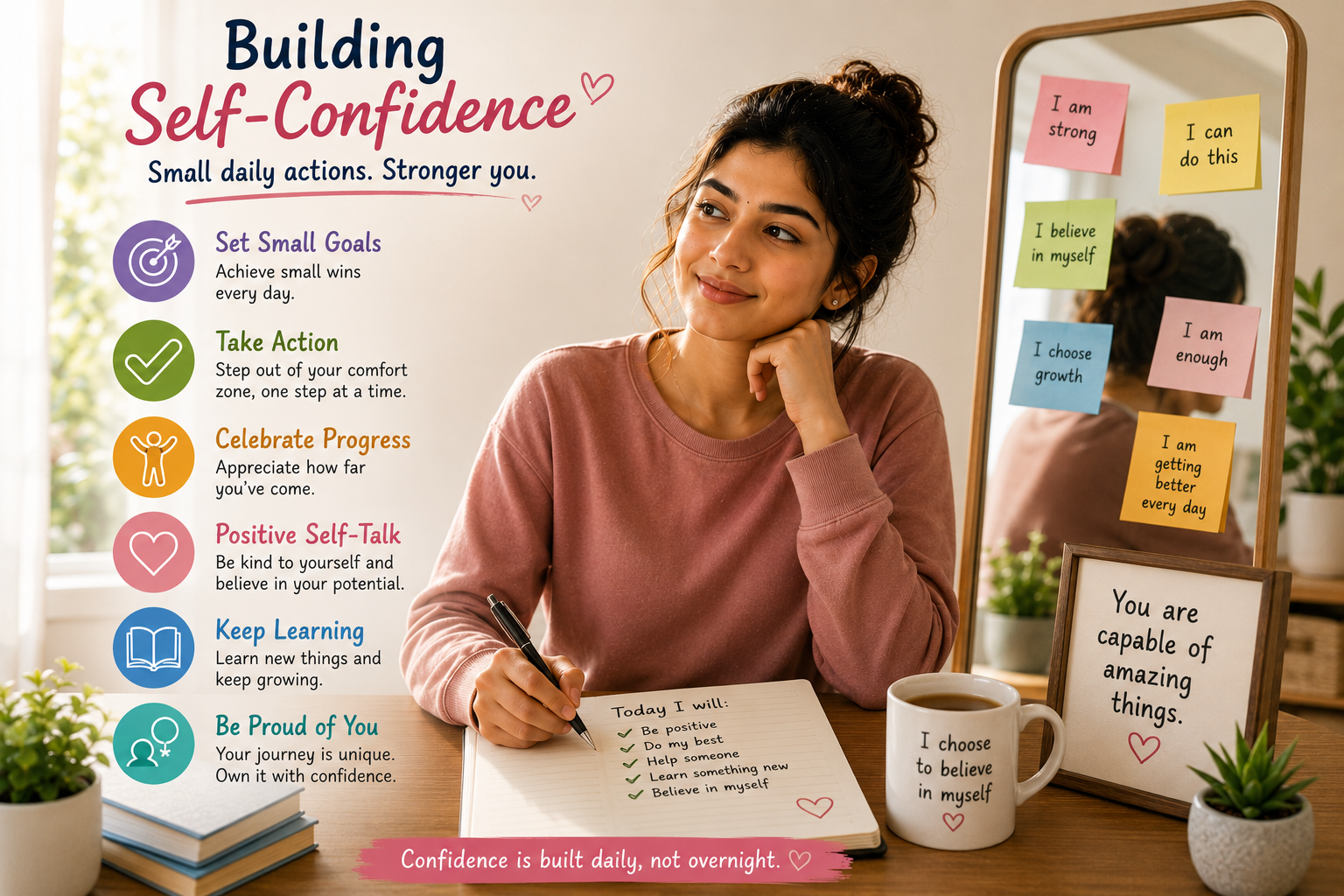
Building Self-confidence can influence how you approach challenges, communicate with others, make decisions, and respond to setbacks. Yet confidence doesn’t always come naturally. A difficult experience, repeated criticism, comparison, or fear of failure can gradually create self-doubt.
Building self-confidence isn’t about believing that you can do everything perfectly. Instead, it means trusting yourself enough to try, learn, adjust, and continue when things don’t go as planned.
Fortunately, confidence can grow through everyday actions. You don’t need to make a dramatic change overnight. Small improvements, repeated consistently, can gradually change the way you see yourself.
What Does Self-Confidence Really Mean?
Self-confidence is the belief that you can handle situations, make decisions, learn new skills, and respond to challenges.
That doesn’t mean feeling confident in every situation. Someone may feel comfortable speaking with friends but become nervous during a presentation. Another person might feel capable at work while doubting themselves when learning something unfamiliar.
Confidence can therefore change depending on the situation.
Rather than waiting until you feel completely confident, start by taking manageable actions. Each experience can provide evidence that you are capable of handling more than you initially expected.
8 Ways to Build Self-Confidence
1. Keep Small Promises to Yourself
Confidence grows when your actions match your intentions.
If you decide to study for thirty minutes, take a short walk, finish a task, or practise a skill, make a reasonable effort to follow through.
The goal isn’t perfection. Instead, choose commitments that are realistic enough to complete consistently.
Each time you follow through, you’re reinforcing the belief that you can rely on yourself. Over time, these small experiences can create a stronger foundation for confidence.
2. Stop Comparing Your Progress
Constant comparison can make even genuine progress feel insignificant.
Someone else may appear more successful, confident, skilled, or experienced. However, you’re usually seeing only part of their journey.
Instead of asking whether you’re ahead of someone else, consider whether you’re moving forward compared with where you were previously.
Perhaps you speak more confidently than you did six months ago. Maybe you’ve learned a skill that once seemed difficult.
Personal progress provides a much healthier measure of growth.
3. Learn From Your Mistakes
Mistakes can quickly damage confidence when you treat them as evidence that you’re incapable.
A different approach is to treat mistakes as information.
After something goes wrong, consider what happened, what you could have done differently, and what you can change next time.
This turns failure into feedback.
Moreover, learning from mistakes helps you develop resilience. Instead of thinking, “I failed, so I can’t do this,” you can think, “That approach didn’t work, so I’ll try another one.”
4. Improve One Skill at a Time
Confidence often develops from competence.
When you become better at something through regular practice, your belief in your ability naturally becomes stronger.
Choose one area that matters to you. It could be public speaking, writing, studying, communication, fitness, technology, or another useful skill.
Break the learning process into manageable steps.
Rather than expecting immediate mastery, focus on becoming slightly better each week.
Progress creates evidence that your abilities can grow.
5. Pay Attention to Your Self-Talk
The way you speak to yourself can either strengthen or weaken confidence.
Statements such as “I’m terrible at everything” or “I’ll never be good enough” turn temporary difficulties into permanent judgments.
Try replacing those statements with language that is honest but constructive.
For example, “I’m still learning this” is very different from “I can’t do this.”
The first statement leaves room for improvement.
When negative self-talk appears, pause and ask whether you’re judging yourself more harshly than you would judge another person.
6. Do Things That Make You Slightly Uncomfortable
Confidence doesn’t usually grow by avoiding every uncomfortable situation.
Instead, gradual exposure can help you become more comfortable with challenges.
If public speaking makes you nervous, begin by speaking in front of one trusted person. Later, try a small group. Eventually, a larger audience may feel less intimidating.
The same principle can apply to introducing yourself, asking questions, sharing an opinion, or trying something new.
Each manageable experience teaches your mind that discomfort can be handled.
7. Take Care of Your Daily Routine
Your physical habits can influence how prepared you feel to face the day.
Regular sleep, movement, nutritious meals, personal organization, and time for relaxation can support your overall well-being.
A consistent routine can also create a sense of control.
When everyday responsibilities feel more organized, there may be less mental energy left for unnecessary self-doubt.
You don’t need a perfect lifestyle. A few sustainable habits are more useful than an unrealistic routine that becomes difficult to maintain.
8. Celebrate Progress Without Waiting for Perfection
Many people postpone feeling proud until they reach a major goal.
Unfortunately, this can make the journey feel endless.
Instead, recognize meaningful progress along the way.
Completing a difficult task, speaking up during a meeting, returning to something after failure, or learning from criticism can all represent growth.
Celebrating progress doesn’t mean ignoring areas that need improvement. It simply acknowledges the effort that has already taken place.
That recognition can provide motivation for the next challenge.
Self-Confidence and Handling Criticism
Criticism can sometimes affect confidence more than expected.
Not every piece of criticism is useful, and not every negative comment deserves to influence how you see yourself.
When someone gives feedback, consider whether it is specific, reasonable, and relevant. If there’s something useful within it, take that information and use it to improve.
On the other hand, an unfair or unnecessarily harsh comment doesn’t automatically become a fact about your abilities.
Learning to separate useful feedback from personal attacks can help protect your confidence.
Building Self-Confidence as a Student
Students often face situations that test confidence. Exams, presentations, interviews, group projects, and academic competition can create pressure.
A low grade may lead to the belief that you’re not capable. However, one result cannot measure your entire potential.
Instead, review what happened and identify areas for improvement. Changing your study strategy, asking a teacher for clarification, or practising difficult topics can turn uncertainty into action.
Similarly, speaking during discussions or presenting in class can become easier through gradual practice.
Confidence grows when you repeatedly experience yourself handling situations that once felt intimidating.
When Confidence Feels Low
Everyone experiences periods of self-doubt.
During those moments, avoid making permanent conclusions based on temporary feelings. A difficult week doesn’t mean you’re incapable, and one failure doesn’t define your future.
Give yourself time to recover and focus on something manageable.
Talk with someone you trust if you need another perspective. Sometimes, hearing an outside view can challenge assumptions that feel completely true when you’re dealing with them alone.
Most importantly, remember that confidence doesn’t require the absence of fear.
You can feel nervous and still take action.
Final Thoughts
Building self-confidence is a gradual process rather than a single achievement.
Keep small promises to yourself, focus on personal progress, learn from mistakes, and develop useful skills. At the same time, practise healthier self-talk and gradually step into situations that challenge you.
Some experiences will still feel uncomfortable. That’s normal.
Confidence isn’t the belief that everything will go perfectly. It’s the growing understanding that you can handle difficulties, learn from mistakes, and keep moving forward.
Start with one small action today. Follow through, notice your progress, and use that experience as evidence that you are capable of growth.
For another practical guide, explore How to Handle Criticism Without Losing Confidence.
For additional information about mental well-being and personal development, explore resources from the American Psychological Association.
Frequently Asked Questions
1. How can I start building self-confidence?
Begin with small, realistic actions that you can complete consistently. Following through on your commitments can gradually strengthen trust in yourself.
2. Does confidence mean never feeling nervous?
No. Confident people can still experience fear or uncertainty. Confidence often means taking action even when you don’t feel completely comfortable.
3. How does comparison affect confidence?
Constant comparison can make your own progress seem less valuable. Focusing on personal improvement provides a more realistic measure of growth.
4. Can mistakes reduce self-confidence?
Mistakes may temporarily affect confidence, but they can also provide valuable information. Learning from them can strengthen resilience and future performance.
5. How long does it take to build confidence?
There is no fixed timeline. Confidence usually develops gradually through repeated experiences, practice, learning, and consistent action.