
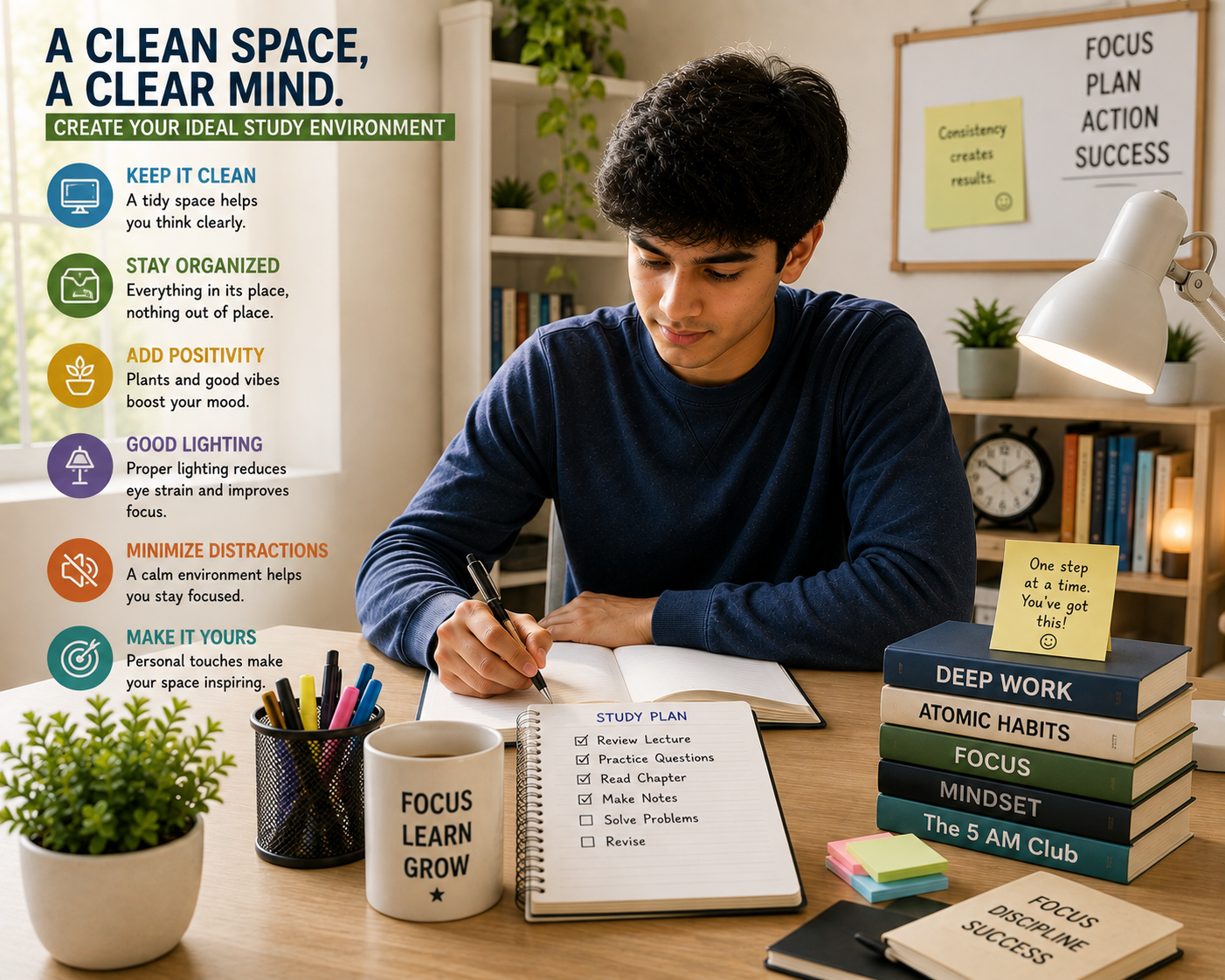
A good study environment doesn’t have to look perfect. You don’t need expensive furniture or a dedicated room. What matters most is creating a space that supports concentration and makes it easier to begin your work.
For students, small changes to the surroundings can make study sessions more comfortable and organized. Even when space is limited, a few practical adjustments can reduce unnecessary interruptions.
Why Your Study Environment Matters
Your surroundings provide constant signals to your brain.
A desk filled with unrelated objects may create visual distractions. A television playing nearby can compete for your attention. Your phone can encourage frequent checking even when you intended to study.
On the other hand, a simple and prepared workspace can make the purpose of the session clearer.
The goal isn’t to create a completely silent or perfect environment. Instead, identify the things that regularly interrupt your attention and make reasonable changes.
8 Ways to Improve Your Study Environment
1. Keep Your Desk Simple
A crowded desk can make it harder to find what you actually need.
Before starting, remove unnecessary items from your immediate workspace. Keep your notebook, books, stationery, and other materials within easy reach.
You don’t need to clean your entire room every time you study.
Focus on the area directly in front of you.
A few minutes of preparation can make the workspace feel more ready for learning.
2. Choose a Comfortable Location
Your study location should allow you to sit comfortably and work without constant interruptions.
A desk in a quiet corner may be useful, but it isn’t the only option.
A library, shared study area, or another calm location can work well if your home environment is distracting.
Consider what usually interrupts you and choose a location that reduces those problems.
Comfort also matters. If you’re constantly adjusting your chair or struggling with poor lighting, your attention may shift away from your work.
3. Control Digital Distractions
A computer can be both a learning tool and a source of distraction.
If you’re studying online, close tabs that aren’t related to your current task. Silence unnecessary notifications and avoid keeping entertainment sites open.
Your phone may require similar attention.
Place it away from your immediate workspace if you frequently check it without realizing it.
The objective isn’t to avoid technology. Students often need digital tools for research, classes, and assignments.
Instead, make the technology around you serve the task you’re completing.
4. Use Lighting That Feels Comfortable
Lighting can influence how comfortable your study space feels.
Whenever possible, use natural light during the day. Position your desk so that the light doesn’t create uncomfortable glare on your screen or notebook.
In the evening, make sure your workspace has enough light to read comfortably.
You don’t need an elaborate lighting setup.
The important thing is avoiding an environment that makes your eyes work unnecessarily hard while you’re studying.
5. Reduce Unnecessary Noise
Some students can concentrate with background sounds, while others need greater quiet.
Identify which environment works best for you.
If conversations or television sounds regularly interrupt you, consider using a quieter room or studying at a library.
When complete silence feels uncomfortable, soft background sound or instrumental music may work for some people.
The key is avoiding audio that repeatedly pulls your attention away from the material.
6. Keep Study Materials Organized
Searching for notes, chargers, textbooks, or assignments can interrupt your study session.
Keep commonly used materials in predictable places.
You might use separate folders for different subjects or organize digital files by course.
At the end of a session, spend a few minutes returning important items to their usual locations.
This small habit can make your next study session easier to begin.
7. Make the Space Feel Pleasant
A study environment doesn’t need to feel cold or uncomfortable.
A small plant, comfortable chair, clean notebook, or personal item can make the space more inviting.
However, avoid adding too many decorative objects if they become distractions.
The goal is to create a place where you feel comfortable spending time without turning the desk into another source of entertainment.
A pleasant environment can make starting your work feel less difficult.
8. Prepare the Space Before You Need It
One of the easiest ways to delay studying is to spend the first fifteen minutes preparing everything.
You can reduce this problem by getting your workspace ready in advance.
Charge your device, keep your materials nearby, clear the desk, and decide what you’ll work on.
When the next study session begins, you can move directly into the task.
Preparation creates a smoother transition from free time to focused work.
Creating a Study Environment in a Small Space
Not every student has access to a private study room.
If you share a bedroom or live in a small home, focus on creating a consistent study zone rather than trying to create a completely separate room.
Even one side of a table can become your designated learning area.
Use headphones when appropriate, keep your materials organized, and communicate with others about periods when you need fewer interruptions.
After studying, clear the area so that it can return to its normal purpose.
A small space can still support effective learning when it has some structure.
Studying Outside Your Home
Sometimes changing locations can help when your usual environment becomes distracting.
A library, quiet café, campus study area, or outdoor seating area may provide a useful alternative.
Different locations can also help separate study time from relaxation.
For example, studying in a library may create a stronger mental association with academic work than studying in the same place where you normally watch television or relax.
Experiment with different locations and notice where you concentrate most comfortably.
Make Your Environment Match the Task
Different activities may require different surroundings.
Reading a chapter might work well in a quiet space. Group assignments may require a larger table or collaborative environment. Online classes may need headphones and a reliable internet connection.
Think about the task before choosing the location.
This simple decision can prevent unnecessary problems during your study session.
A good environment supports the activity instead of forcing you to constantly adapt to your surroundings.
Don’t Wait for a Perfect Setup
It’s easy to spend too much time trying to create the ideal study space.
You don’t need a perfect desk, expensive equipment, or a completely silent room before you can begin.
Work with what you have.
Move a few distracting objects, silence notifications, gather your materials, and start.
Improving your environment should make studying easier, not become another form of procrastination.
Final Thoughts
A supportive study environment can make it easier to concentrate and begin important academic tasks.
Keep your workspace simple, choose a comfortable location, control digital distractions, and reduce unnecessary noise. Organizing your materials and preparing the space before each session can also save time and reduce interruptions.
Remember that an effective study area doesn’t need to be perfect.
What works for one student may not work for another.
Start by identifying the biggest distraction in your current environment and make one practical change.
Perhaps your phone interrupts you most often. Maybe your desk is cluttered, or background noise makes reading difficult.
Fix that one issue first.
Small environmental changes can gradually create a study space that supports better learning.
For another student-focused guide, explore Better Study Habits: 8 Ways to Learn Effectively.
For additional information about learning, attention, and student well-being, explore resources from the American Psychological Association.
Frequently Asked Questions
1. What makes a good study environment?
A good study environment is comfortable, organized, and suitable for concentration. It should minimize unnecessary distractions while providing the materials you need.
2. Do I need a separate study room?
No. A consistent area of a bedroom, dining table, library, or shared space can work well if it supports focused learning.
3. Should I listen to music while studying?
It depends on the person and the task. Some students find quiet background music helpful, while others concentrate better without it.
4. How can I study when my home is noisy?
Try moving to a quieter area, using appropriate headphones, studying at a library, or choosing a time when fewer interruptions are likely.
5. How often should I clean my study space?
A quick reset before or after study sessions can prevent clutter from building up. You don’t need to spend a long time cleaning every day.