
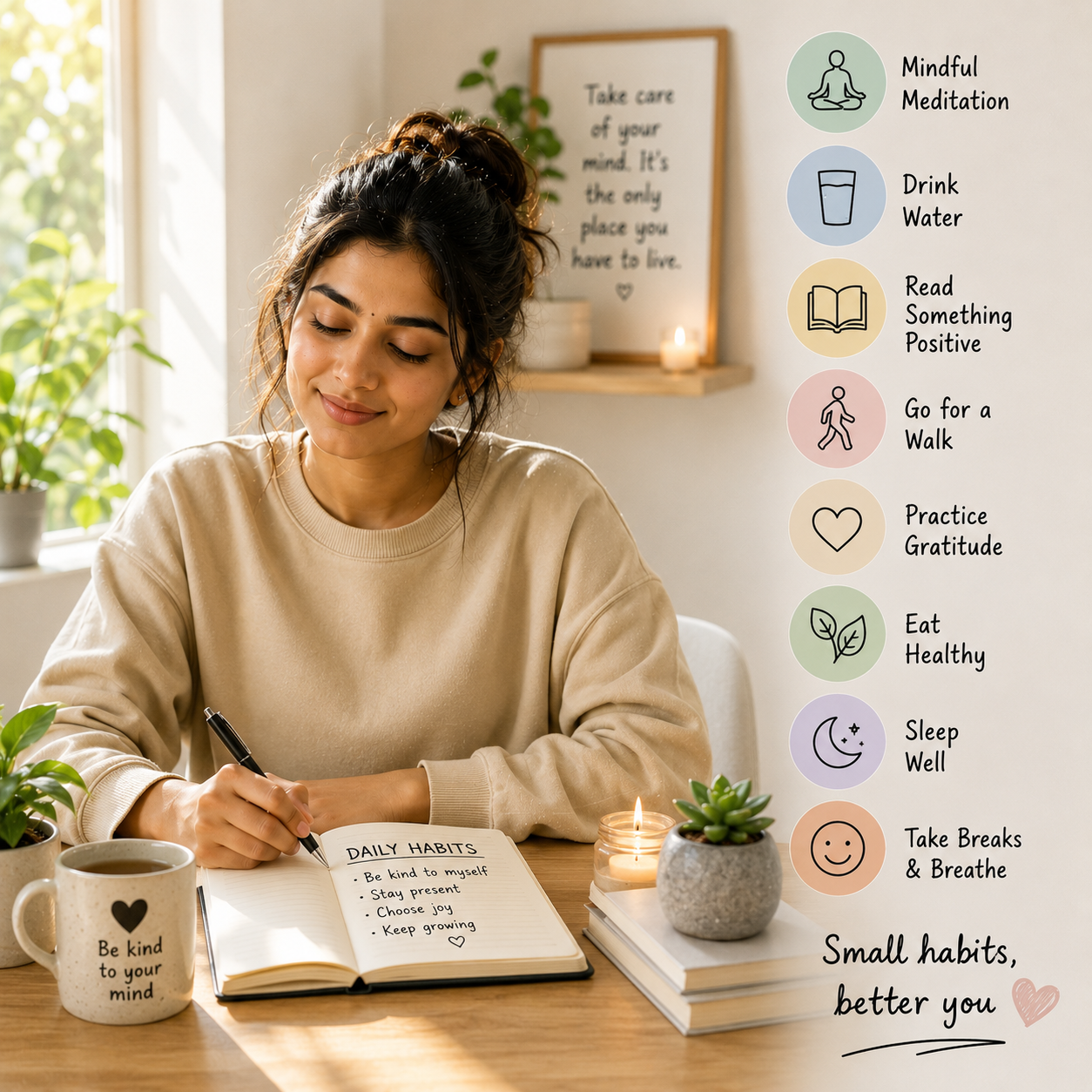
Emotional well-being : Life doesn’t always feel balanced. Some days are productive and positive, while other days bring stress, frustration, tiredness, or uncertainty. That’s completely normal.
Emotional well-being isn’t about feeling happy all the time. Instead, it involves understanding your emotions, responding to challenges in healthier ways, and creating habits that help you feel more balanced.
Fortunately, improving your emotional well-being doesn’t require changing your entire lifestyle.
Small actions can make a meaningful difference. A few quiet minutes in the morning, a short walk, a conversation with someone you trust, or simply taking time to understand how you feel can become valuable parts of your day.
Therefore, rather than trying to change everything at once, start with a few simple habits that you can realistically maintain.
Why Emotional Well-Being Matters
Your emotional state can influence how you handle stress, communicate with others, approach responsibilities, and respond to unexpected situations.
When you take care of your emotional well-being, you may find it easier to:
- Manage everyday stress
- Understand your feelings
- Maintain healthier relationships
- Stay focused
- Recover from setbacks
- Communicate clearly
- Build self-awareness
- Approach challenges with greater balance
Moreover, emotional well-being isn’t something you achieve once and never have to think about again.
Your needs can change as your responsibilities, relationships, work, studies, and circumstances change.
Because of this, simple daily habits can provide consistent support.
8 Small Daily Habits for Better Emotional Well-Being
1. Start Your Morning Without Rushing
The way you begin your morning can influence how you approach the rest of your day.
Instead of immediately checking social media, emails, or messages, give yourself a few quiet minutes.
You could:
- Drink a glass of water
- Stretch gently
- Open a window
- Sit quietly
- Review your priorities
- Take a few slow breaths
Even five minutes can create a calmer transition into your day.
Furthermore, starting slowly can help you feel less reactive when new responsibilities appear.
2. Check In With Yourself
It’s easy to move from one task to another without noticing how you’re actually feeling.
Therefore, pause during the day and ask:
“How am I feeling right now?”
You might feel calm, tired, frustrated, excited, worried, or overwhelmed.
Whatever the answer is, simply acknowledge it.
You don’t have to immediately change the emotion.
Instead, recognizing how you feel can help you understand what you may need.
For example, feeling unusually irritated might mean you need a break, some quiet time, food, rest, or a change of environment.
3. Move Your Body Every Day
Physical movement can provide a useful break from mental pressure.
You don’t necessarily need an intense workout.
A short walk, stretching session, cycling, yoga, dancing, or another activity you enjoy can help you step away from your usual routine.
In addition, movement can break up long periods of sitting or screen time.
The goal isn’t perfection.
Rather, find an activity you enjoy and make it a regular part of your day.
4. Spend Time Outdoors
Modern routines often keep us indoors for hours.
However, stepping outside can give your mind a change of environment.
Take a short walk, sit in a garden, visit a nearby park, or simply spend a few minutes outside.
While you’re there, pay attention to what’s around you.
Notice the trees, sounds, sky, sunlight, temperature, or movement.
As a result, you can give your attention a break from repetitive thoughts and reconnect with the present moment.
5. Talk to Someone You Trust
Difficult emotions can feel heavier when you keep everything to yourself.
Therefore, make time to talk with someone you trust.
It could be:
- A close friend
- A family member
- A mentor
- A colleague
- Someone else you feel comfortable with
You don’t always need someone to solve your problem.
Sometimes, simply being heard can help you organize your thoughts.
Moreover, meaningful conversations can strengthen relationships and remind you that you don’t have to handle every challenge alone.
6. Write Down What’s on Your Mind
When the same thoughts keep returning, writing them down can create some mental space.
You don’t need to write several pages.
Instead, spend five minutes answering a few simple questions:
- What is bothering me?
- What am I worried about?
- What can I control?
- What do I need today?
- What went well?
For example, writing down a concern can help you separate the actual problem from the thoughts surrounding it.
Similarly, recording something positive can help you notice good moments that might otherwise be forgotten.
7. Practise Supportive Self-Talk
The way you speak to yourself can influence how you respond to difficult situations.
When something goes wrong, notice your internal response.
Instead of thinking:
“I always get things wrong.”
try:
“This didn’t go as planned, but I can learn from it.”
Likewise, replace harsh expectations with more balanced thoughts.
Positive self-talk doesn’t mean pretending that problems don’t exist.
Instead, it means responding to yourself with patience and understanding.
As a result, you can acknowledge mistakes without allowing them to define your entire day.
8. Create a Calm Evening Routine
Your evening provides an opportunity to slow down after a busy day.
Therefore, create a simple routine that helps you transition away from work, studying, and constant notifications.
You could:
- Prepare for tomorrow
- Organize your workspace
- Read a few pages
- Stretch
- Listen to calming music
- Reflect on your day
- Spend some quiet time with family
Furthermore, preparing for tomorrow can reduce the number of things competing for your attention at night.
A calm ending can help you finish the day with greater awareness instead of carrying every unfinished thought into tomorrow.
How to Make These Habits Last
Knowing which habits are helpful is one thing. Practising them consistently is another.
Therefore, don’t try to adopt all eight habits immediately.
Start with one or two.
For example:
Morning: Spend five minutes without checking your phone.
Afternoon: Take a short walk.
Evening: Write down one thing that went well.
Once these habits become comfortable, add another.
This gradual approach is easier to maintain than creating a complicated routine that becomes overwhelming after a few days.
Don’t Expect to Feel Positive Every Day
Improving emotional well-being doesn’t mean eliminating difficult emotions.
Everyone experiences sadness, frustration, disappointment, stress, and uncertainty.
The goal isn’t to avoid these feelings.
Instead, learn to notice them and respond to them in healthier ways.
For example, taking a short break doesn’t mean ignoring a problem.
Similarly, acknowledging that you’re having a difficult day doesn’t mean giving up on everything.
Rather, it gives you an opportunity to respond with greater awareness.
Common Habits That Can Work Against Emotional Well-Being
Some everyday patterns can make emotional challenges harder to manage.
For example, constantly comparing yourself with others can create unnecessary pressure.
Likewise, ignoring emotions completely may make it harder to understand what you actually need.
Try to avoid:
- Constantly comparing yourself with others
- Ignoring your emotions
- Spending excessive time scrolling
- Neglecting rest
- Keeping every concern to yourself
- Expecting constant productivity
- Being overly critical of yourself
- Trying to change everything overnight
Instead, focus on realistic progress.
Some days will be easier than others. That’s okay.
The important part is returning to supportive habits when you’re ready.
A Simple Daily Emotional Well-Being Routine
If you’re unsure where to start, try this simple structure.
Morning
Pause → Breathe → Identify your priorities
Afternoon
Move → Step outside → Check in with yourself
Evening
Disconnect → Reflect → Prepare for tomorrow
You don’t need to spend hours following this routine.
Instead, use these small moments as reminders to slow down and reconnect with yourself.
Over time, these moments can become natural parts of your day.
Small Habits Can Create Bigger Changes
A single five-minute habit may not seem important.
However, repeating that habit every day creates consistency.
For example, five minutes of reflection today may become a regular journaling habit. A short walk today may become a healthier daily routine. One honest conversation may encourage you to maintain stronger social connections.
Therefore, don’t underestimate small actions.
You don’t need a completely new lifestyle to start taking better care of your emotional well-being.
You simply need a starting point.
Final Thoughts
Emotional well-being is built through everyday choices.
You can support it by slowing down in the morning, checking in with yourself, moving your body, spending time outside, connecting with people you trust, writing down your thoughts, practising supportive self-talk, and creating a calmer evening routine.
You don’t need to practise every habit perfectly.
Instead, choose one that feels realistic and start there.
Then, when that habit becomes comfortable, build on it.
Small actions may seem simple, but consistency can turn them into meaningful parts of a healthier everyday life.
For more ideas on developing emotional strength, read Building Emotional Strength: 7 Daily Habits for a Positive Mindset.
For additional information about mental health and well-being, explore resources from the World Health Organization.
Remember, emotional well-being isn’t about creating a perfect life. It’s about learning how to take care of yourself while navigating real life.
Frequently Asked Questions
1. What is emotional well-being?
Emotional well-being involves understanding your feelings, managing everyday challenges, maintaining relationships, and developing healthier ways to respond to difficult situations.
2. What is one simple habit for improving emotional well-being?
Start with a daily emotional check-in. Take a few minutes to identify what you’re feeling without judging yourself.
3. Can small habits really improve emotional well-being?
Yes. Small habits can become valuable when they are practical, repeated consistently, and suited to your everyday routine.
4. How can students support their emotional well-being?
Students can create simple routines that include sufficient breaks, physical movement, social connection, reflection, and time away from constant academic or digital pressure.
5. Does emotional well-being mean feeling positive all the time?
No. Healthy emotional well-being includes experiencing difficult emotions and learning healthier ways to understand and respond to them.