
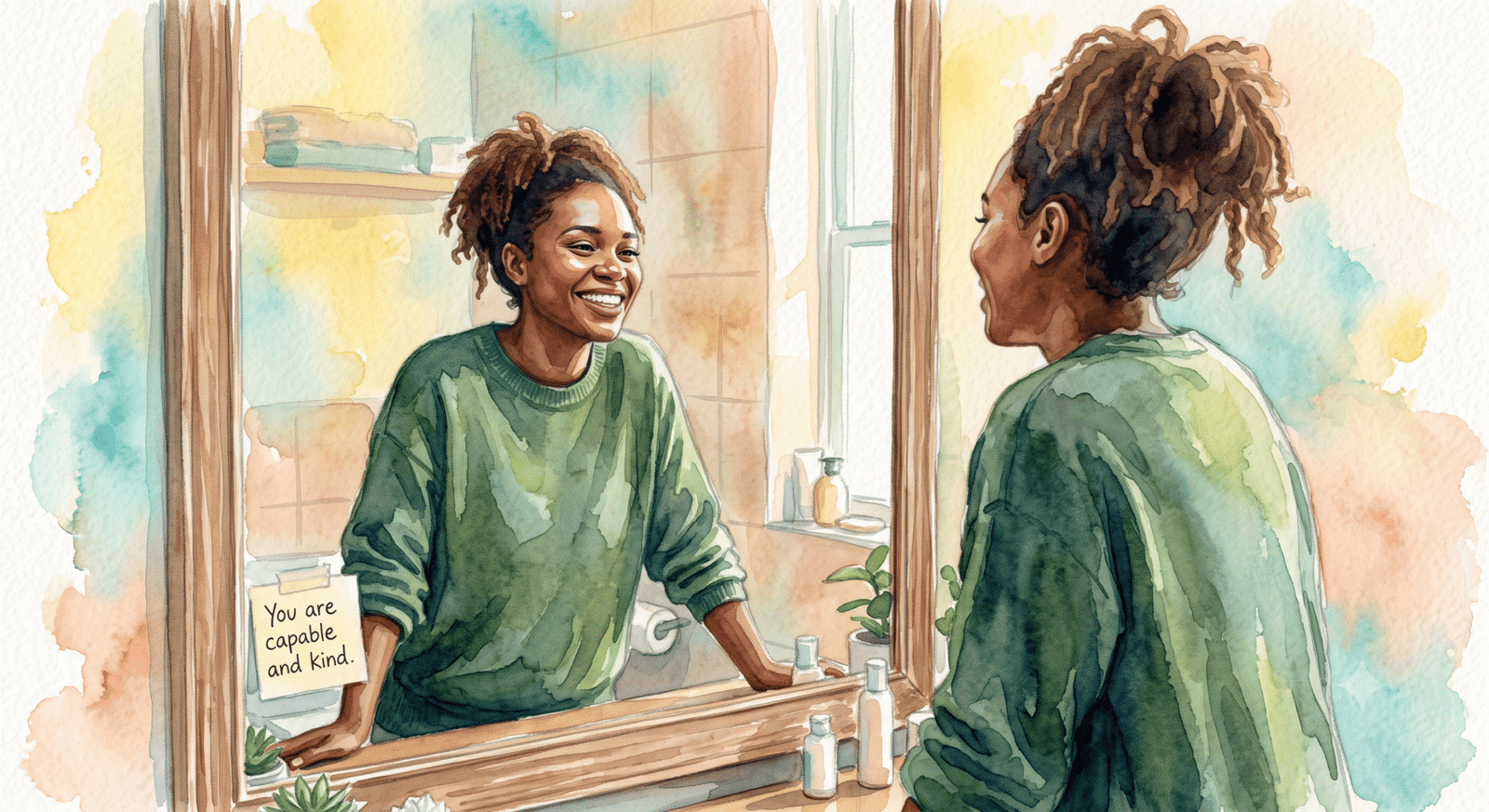
Positive self-talk is the habit of speaking to yourself with encouragement instead of constant criticism. Everyone has an inner voice that influences how they think, feel, and respond to challenges. However, when that voice becomes overly negative, it can affect confidence, increase stress, and make everyday problems seem more difficult.
Many people don’t notice how often they criticize themselves. Small thoughts like “I’m not good enough” or “I always make mistakes” may seem harmless. Over time, though, these thoughts can shape your beliefs and lower your self-confidence.
The good news is that positive self-talk can be learned. By changing the way you speak to yourself, you can develop a healthier mindset, improve emotional well-being, and become more confident in everyday situations.
In this guide, you’ll learn what positive self-talk is, why it matters, and ten practical ways to create a more supportive inner voice.
What Is Positive Self-Talk?
Positive self-talk means replacing harsh, negative thoughts with realistic and encouraging ones. It isn’t about pretending everything is perfect or ignoring challenges.
Instead, it means responding to difficult situations with kindness, balance, and optimism. For example, instead of saying, “I always fail,” you might say, “This didn’t go as planned, but I can learn from it.”
Over time, this healthier way of thinking supports better emotional well-being and stronger resilience.
Fortunately, anyone can develop this habit with regular practice.
Why Positive Self-Talk Matters
Your thoughts influence your emotions and your actions.
When your inner voice is constantly critical, it becomes harder to stay motivated or recover from setbacks. In addition, negative thinking often increases stress and self-doubt.
On the other hand, encouraging yourself creates greater confidence and emotional balance. As a result, you become more willing to try new things, solve problems, and handle challenges calmly.
Developing positive self-talk doesn’t remove life’s difficulties, but it helps you face them with a healthier mindset.
Signs of Negative Self-Talk
Sometimes negative thinking becomes so familiar that you hardly notice it.
You may benefit from improving your inner dialogue if you:
- Frequently criticize yourself.
- Focus more on mistakes than achievements.
- Expect the worst in difficult situations.
- Compare yourself with others.
- Doubt your abilities often.
- Feel discouraged after small setbacks.
- Find it difficult to accept compliments.
Recognizing these patterns is the first step toward creating healthier thinking habits.
10 Simple Ways to Change Your Inner Voice
1. Notice Your Thoughts
Pay attention to how you speak to yourself throughout the day.
Simply becoming aware of negative thinking makes it easier to replace it with more balanced thoughts.
2. Replace Harsh Words
Instead of saying, “I can’t do this,” try saying, “I’m still learning.”
Small changes in language can gradually improve your confidence and motivation.
3. Focus on Progress
Perfection isn’t necessary for growth.
Celebrate the effort you make each day, even when results aren’t immediate.
4. Practice Daily Gratitude
Take a few moments to notice what went well today.
Gratitude encourages a more balanced perspective and reduces the tendency to focus only on problems.
5. Challenge Negative Assumptions
Ask yourself whether your thoughts are based on facts or fears.
Looking for evidence helps you respond more realistically instead of assuming the worst.
6. Speak to Yourself Like a Friend
Imagine what you would say to someone you care about in the same situation.
Offer yourself that same patience, encouragement, and understanding.
7. Learn from Mistakes
Mistakes are opportunities to improve.
Instead of seeing them as failures, view them as valuable lessons that help you grow.
8. Surround Yourself with Positive Influences
Spend time with people who encourage and support you.
Positive environments make it easier to maintain healthier thinking habits.
9. Practice Mindfulness
Take a slow breath when negative thoughts appear.
Bringing your attention back to the present moment helps reduce self-criticism and improves emotional awareness.
10. Be Patient with Yourself
Changing long-standing habits takes time.
Celebrate small improvements and remember that every positive thought strengthens your inner voice.
If you’d like to become more understanding toward yourself, read our guide on Self-Compassion: How to Be Kinder to Yourself Every Day.
Build a More Supportive Mindset
Healthy thinking develops through consistent practice.
Choose one technique from this guide and use it every day. Then, add another habit when you feel ready. Over time, these small changes can transform the way you respond to challenges.
Most importantly, remember that your inner voice should support your growth, not hold you back.
Final Thoughts On Positive Self-Talk
Positive self-talk is a powerful habit that can improve confidence, reduce stress, and strengthen emotional well-being.
Start by making one small change today. As you continue practicing these techniques, you’ll develop a healthier mindset and become more resilient during life’s challenges.
For trusted mental health information, visit the American Psychological Association (APA).
Frequently Asked Questions
What is positive self-talk?
Positive self-talk is the practice of replacing negative thoughts with realistic, encouraging, and supportive thinking.
How can I improve positive self-talk?
You can improve positive self-talk by noticing negative thoughts, challenging unrealistic beliefs, practicing gratitude, and speaking to yourself with kindness.
Why is positive self-talk important?
Positive self-talk supports confidence, reduces stress, improves emotional well-being, and helps you respond more effectively to everyday challenges.
Conclusion
The way you speak to yourself matters more than you may realize.
By practicing positive self-talk each day, you can build confidence, reduce self-doubt, and develop healthier thinking habits. Start with one small change today, and allow those positive habits to grow over time.