
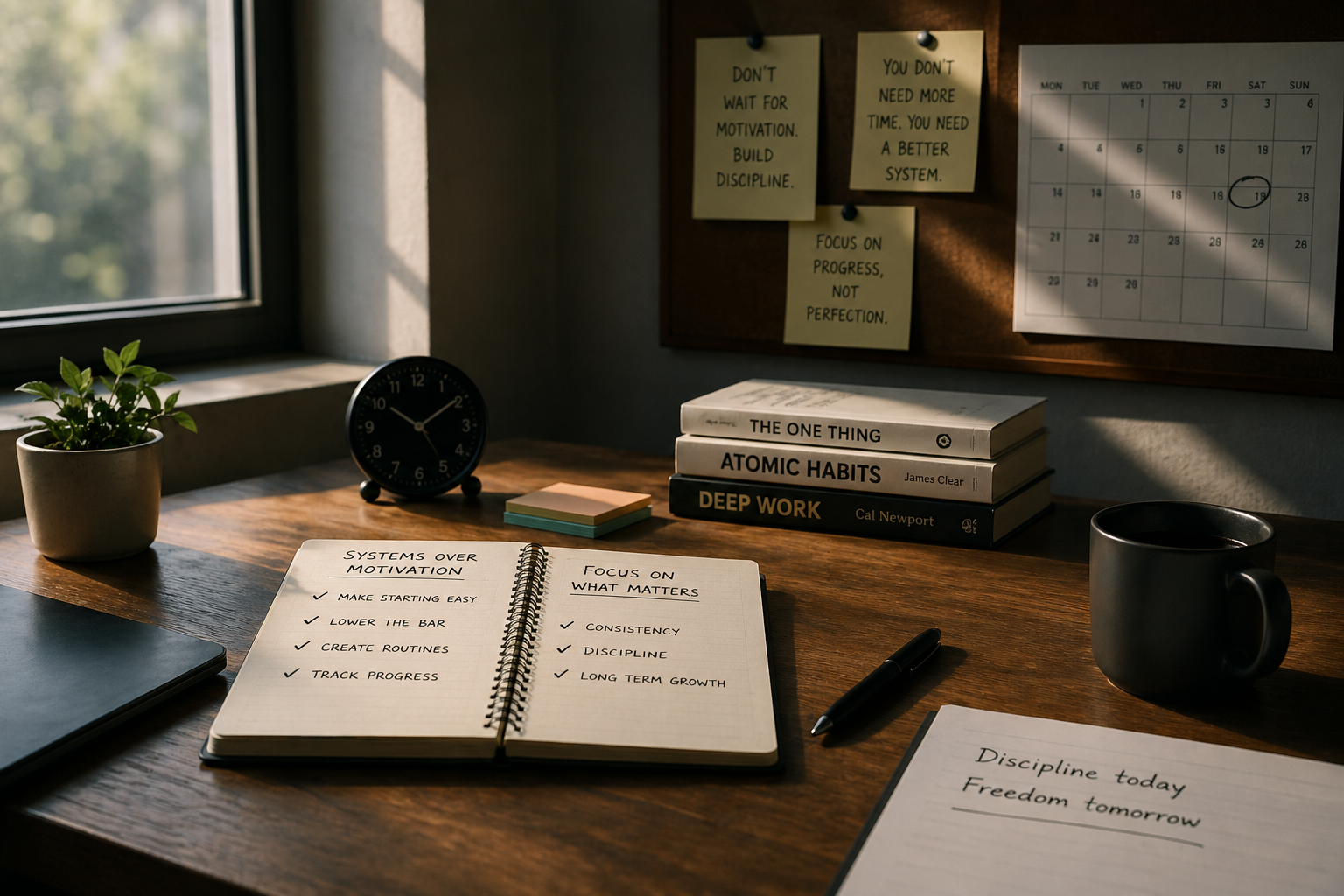
Motivation feels powerful—but it’s unreliable.
Some days you wake up energized, ready to take on everything. Other days, even the smallest task feels heavy. If your progress depends on how you feel, consistency becomes impossible.
This is where most people get stuck.
They wait for the right mood, the right energy, the right moment.
But meaningful work doesn’t come from waiting. It comes from structure.
The Problem with Motivation
Motivation is emotional.
And emotions fluctuate.
When you rely on motivation:
- You start strong but struggle to sustain
- You avoid difficult but important work
- You confuse intention with action
It creates a cycle of bursts and burnout.
Discipline Changes the Game
Discipline is different.
It doesn’t ask how you feel.
It asks what needs to be done.
Discipline is not about being strict or rigid—it’s about removing decision fatigue. When your actions are pre-decided, you don’t waste energy negotiating with yourself.
You just begin.
Designing Systems That Work
Instead of chasing motivation, build systems that make action easier:
- Make starting effortless
Reduce the friction. Open the document. Set the timer. Take the first step. - Lower the bar
You don’t need a perfect effort—just a consistent one. - Create fixed routines
Same time, same place, same task. Consistency builds identity. - Track progress, not mood
What you did matters more than how you felt doing it.
The Shift That Matters
When you stop asking, “Do I feel like doing this?”
and start asking, “Is this aligned with my goals?” — everything changes.
You move from reaction to intention.
From chaos to control.
Why This Matters
In the long run, discipline beats motivation every time.
Because motivation gets you started…
but discipline keeps you going when it gets hard, boring, or uncomfortable.
At Rational Works, we believe real growth comes from building systems that support you—even on your worst days.
Because success isn’t built on perfect days.
It’s built on consistent ones.
Stop Chasing Motivation. Start Designing Discipline.
Motivation feels powerful—but it’s unreliable.
Some days you wake up energized, ready to take on everything. Other days, even the smallest task feels heavy. If your progress depends on how you feel, consistency becomes impossible.
This is where most people get stuck.
They wait for the right mood, the right energy, the right moment.
But meaningful work doesn’t come from waiting. It comes from structure.
The Problem with Motivation
Motivation is emotional.
And emotions fluctuate.
When you rely on motivation:
- You start strong but struggle to sustain
- You avoid difficult but important work
- You confuse intention with action
It creates a cycle of bursts and burnout.
Discipline Changes the Game
Discipline is different.
It doesn’t ask how you feel.
It asks what needs to be done.
Discipline is not about being strict or rigid—it’s about removing decision fatigue. When your actions are pre-decided, you don’t waste energy negotiating with yourself.
You just begin.
Designing Systems That Work
Instead of chasing motivation, build systems that make action easier:
- Make starting effortless
Reduce the friction. Open the document. Set the timer. Take the first step. - Lower the bar
You don’t need a perfect effort—just a consistent one. - Create fixed routines
Same time, same place, same task. Consistency builds identity. - Track progress, not mood
What you did matters more than how you felt doing it.
The Shift That Matters
When you stop asking, “Do I feel like doing this?”
and start asking, “Is this aligned with my goals?” — everything changes.
You move from reaction to intention.
From chaos to control.
Why This Matters
In the long run, discipline beats motivation every time.
Because motivation gets you started…
but discipline keeps you going when it gets hard, boring, or uncomfortable.
At Rational Works, we believe real growth comes from building systems that support you—even on your worst days.
Because success isn’t built on perfect days.
It’s built on consistent ones.